
Gaia
-
 Astronomers have discovered the cosmic equivalent of a parent crashing a teenagers’ party to make sure they have enough water. An aging star has been detected passing through a young star-forming region, delivering elements crucial for life to form.
 -
 While two thirds of exoplanets may be a fiery, boiling wasteland, scientists believe the other third occupy a "just right" goldilocks orbit around their star, and this, much like Earth's orbit, could provide the right environmental support for life.
 -
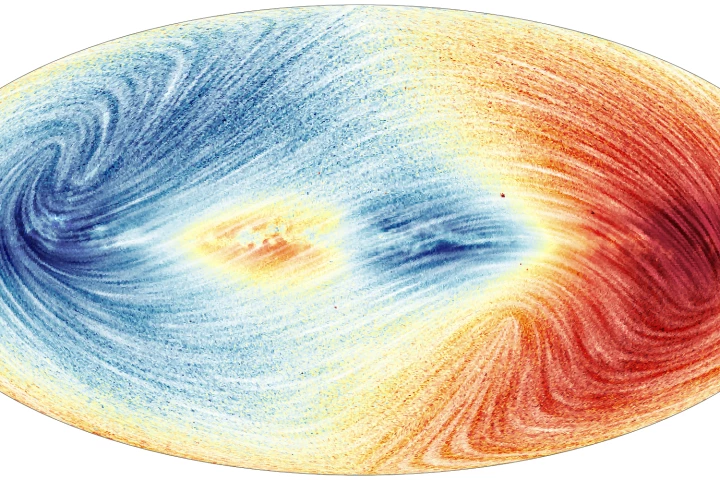 The most comprehensive picture of the Milky Way just got more detailed. Gaia's third data release covers almost 2 billion stars, including their makeup and movements, plus new catalogs of starquakes, binary systems, variable stars and other objects.
 -
 The James Webb Space Telescope has snapped its first in-focus image. With this milestone, the telescope is now set to meet or even exceed its original science goals. It was also recently spotted by another spacecraft in the area.
 -
 Astronomers have discovered a big hole in space. New 3D visualizations of the Perseus and Taurus star-forming clouds have revealed a large cavity between them, possibly created in ancient supernova explosions.
 -
 Astronomers have discovered the aftermath of a cosmic hit-and-run in our own neighborhood. While studying the closest star cluster to the Sun, ESA scientists realized it may have been disrupted by a huge lump of invisible mass, possibly dark matter.
 -
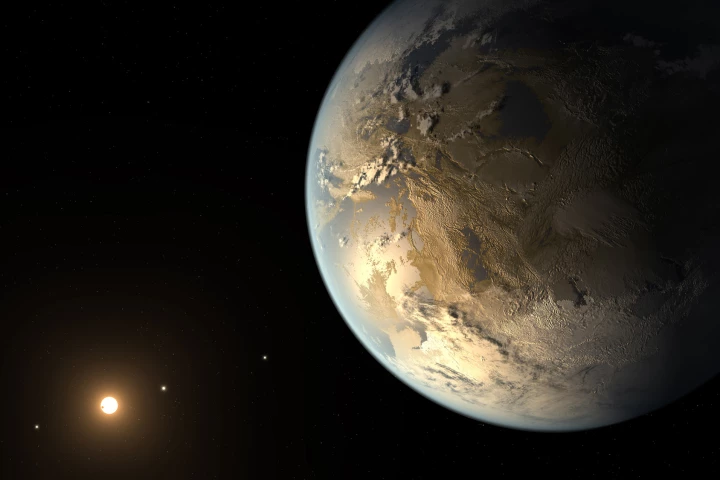 Based on data from the Kepler Space Telescope and the Gaia mission, there may be up to 300 million habitable planets in our galaxy. The research refines a key factor in the Drake equation that estimates how many extraterrestrial civilizations may exist.
 -
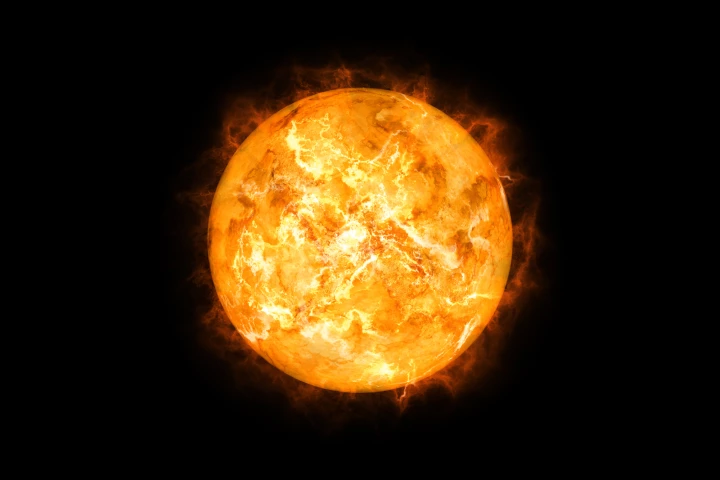 To get a sense of how “normal” the Sun may be, astronomers have compared the Sun to hundreds of similar stars. It turns out that it’s actually far less active than its peers – but is this a permanent personality, or is it just going through a phase?
 -
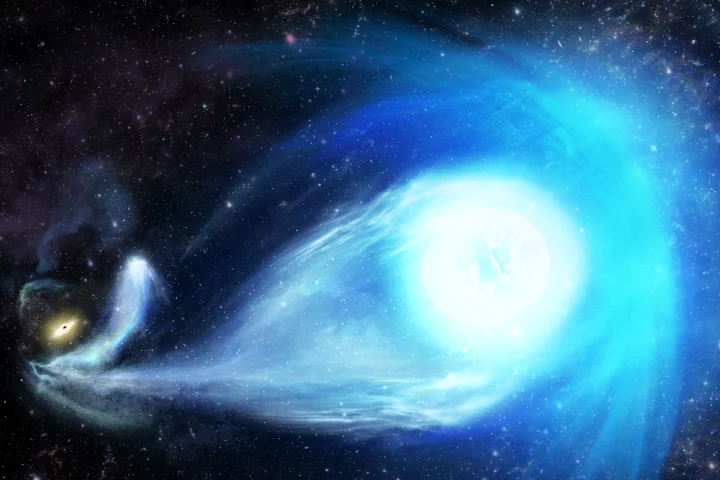 Astronomers have discovered a star known as S5-HVS1, travelling at an incredible 6 million km/h (3.7 million mph). That not only makes it the fastest known star, but it’s fast enough to fling it right out of the galaxy.
 -
 It looks like a Jackson Pollock painting, but this colorful mess is a new map of the Milky Way, showing strange star structures.
 -
 Just how common are potentially habitable Earth-like planets? Researchers on a new study claim to have come up with the most accurate estimate yet – and they’re more common than you might think.
 -
 Last year astronomers discovered a gigantic “ghost” galaxy, named Antlia 2, orbiting the Milky Way. Now, new research led by Rochester University has found that the bizarre galaxy may have been involved in a hit-and-run that left the Milky Way with a wobbly galactic disc.
Load More