
Fluid
-
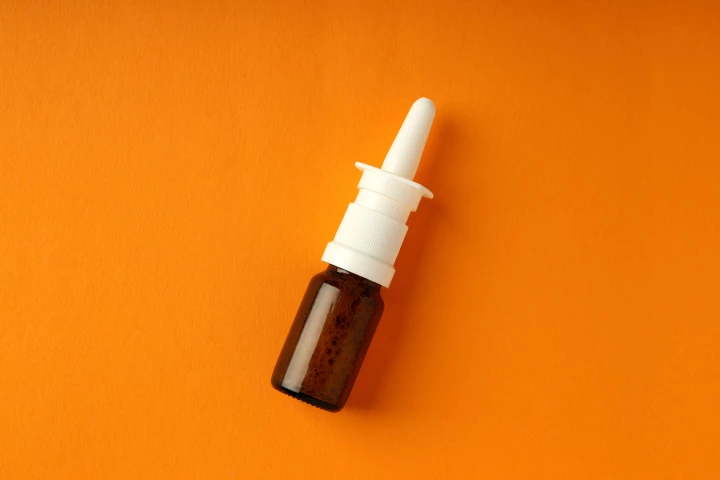 The US Food and Drug Administration (FDA) has approved the first intranasal diuretic for heart, liver and kidney disease patients, aiming to prevent a common and costly issue that results in more than a million hospitalizations each year.
 -
 We’re willing to bet you’ve never given much thought to how bugs urinate, but even if you did you probably wouldn’t imagine them using butt-based pinball paddles to flick drops of pee at 40 G’s, using physics never before seen in nature.
 -
 Researchers at MIT have observed “electron whirlpools” for the first time. The bizarre behavior arises when electricity flows as a fluid, which could make for more efficient electronics.
 -
 Bubbles aren’t known for their long lifespans, usually only giving a few seconds of childlike joy before they pop. A team of French scientists has developed a new way to make bubbles last longer, with the record holder surviving for well over a year.
 -
 Nobody likes needles – at best they’re an unpleasant means to an important end. Microneedle patches could be a painless alternative, and now researchers have developed a way to use them to detect biomarkers at much lower levels without drawing blood.
 -
 If you pushed a ball with negative mass, it would move towards you. It might be hard to picture, but according to Newtonian physics it should be possible. Now a team at Washington State University has demonstrated the phenomenon in practice, creating a fluid that has the properties of negative mass.
 -
 An unusual state of matter, first theorized almost 50 years ago, has been created in experiments for the first time. Say hello to the supersolid, a state where atoms simultaneously exhibit a crystalline structure but still flow like a frictionless fluid.