
Fiber Optic
-
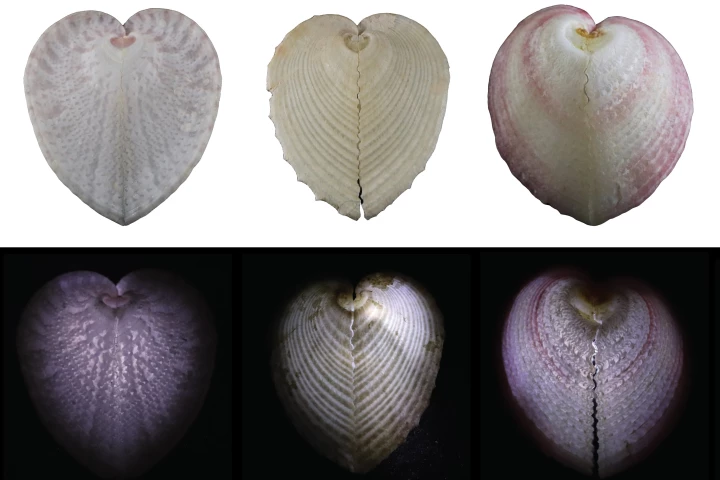 When it comes to technologies used only by humans, you might think that fiber optics would rank right up there. Such is apparently not the case, however, as scientists have discovered that a certain clam uses "fiber optics" of its own to get food.
 -
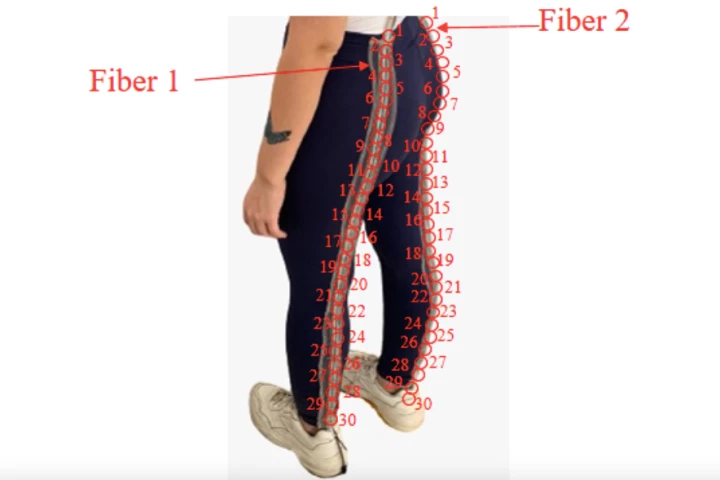 While it's often important for doctors to monitor a patient's physical activity throughout the day, placing cameras in their home is an obtrusive way of doing so. Scientists have now developed an alternative, in the form of activity-tracking pants.
 -
 Global warming has caused many large whales to move from warmer waters, increasing the risk of being struck by ships. Researchers have used existing fiber-optic cables to track fin whales in real time, which may reduce the incidence of ship strikes.
 -
 Although optical fibers are highly effective at data transmission, they're also relatively brittle. An experimental new type of optical fiber addresses that limitation, by incorporating a core made of liquid glycerol.
 -
 Medical endoscopes may look small, but their tips are actually several millimeters wide, making them too big to image living cells within the body. A new system, however, lets users view images through a single ultra-thin strand of optical fiber.
 -
 A quantum internet could one day allow quantum computers to team up and tackle some gigantic problems. Researchers at Toshiba are a step closer, demonstrating quantum communications sent over a record-breaking 600 km (373 miles) of optic fiber.
 -
 An Australian/German team has developed the world's smallest imaging device, at the thickness of a human hair. It's capable of traveling down the blood vessels of mice, offering unprecedented abilities to 3D-scan the body at microscopic resolutions.
 -
 Some of the most useful tools are the ones that allow you to grab something. However, what if that "something" is very, very small? Well, that's where a new light-activated micro-gripper could come in – it's said to be the world's smallest.
 -
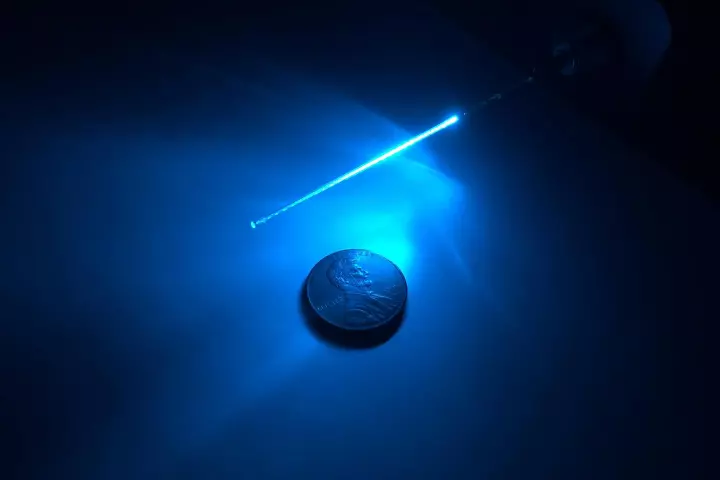 Medical devices such as catheters extend from within a patient's body out through an opening in their skin, and unfortunately those openings often become infected. Thanks to new research, however, ultraviolet optical fibers may eventually keep such infections from occurring.
 -
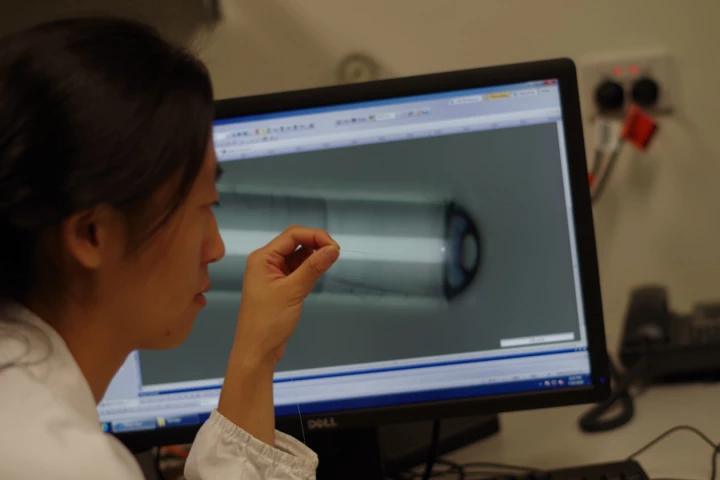 University of Adelaide researchers have created a fiber optic probe that can reach deep into the brain to capture images and measure temperature. It’s been developed to learn more about hyperthermia to do with drug use, and may lead to new understanding of drug toxicology.
 -
 While current seismometers can pick up tremors with precision, they’re short-ranged and expensive. Now a Stanford study has demonstrated that an extensive earthquake-detection network could already exist right under our feet: the optical fiber cables piping high-speed internet throughout cities.
 -
 Diagnosing a muscular disorder often requires a painful tissue sample biopsy. Researchers have developed a less invasive alternative, using a thin fiber optic probe to quickly scan and measure the health of muscle tissue. For the first time, the team has now tested it on living muscles.
Load More