
Eyewear
-
 A clever new set of glasses may offer new hope to people with macular degeneration. By copying the structure of a fly's eyes, the specs are claimed to "fill in" the missing section of the wearer's view of the world.
 -
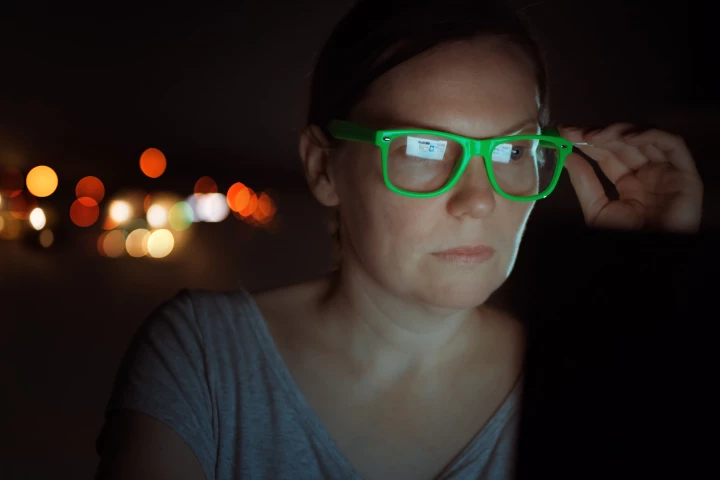 In a study of studies, researchers concluded that eyeglasses that block blue light might not deliver on claims made by advertisers or optometrist offices. They caution consumers to think twice about shelling out the extra cash for the specs.
 -
 We've recently heard about several experimental devices that monitor the pressure in glaucoma patients' eyes. The miLens contact lens – which is the latest to cross our radar – has just completed clinical trials, and could be available by next year.
 -
 Presbyopia is a common form of age-induced far-sightedness. Now a Stanford team has developed a pair of high-tech specs called autofocals, which use fluid-filled lenses, depth-sensing cameras and eye-tracking technology to make sure whatever a wearer is looking at stays sharp.
 -
 Over the years, we've gotten pretty used to glasses with photochromic lenses, which automatically darken when exposed to bright light. This Wednesday, however, Johnson & Johnson Vision announced the upcoming availability of its self-tinting contact lenses.
 -
 It can be a hassle, taking your glasses on and off to switch between near and distant vision. That's why scientists from the University of Utah have developed glasses that change focus automatically, depending on what you're looking at.
 -
 Adlens Adjustables are inexpensive glasses that can be focused by the user to (more or less) match their prescription. We recently gave them a try, and can tell you that they work ... but you probably won't want to use them as your primary glasses.
 -
 Instead of looking through a different area of the lenses (and tilting your head forward and back) to switch from near to far objects as is the case with bifocals, the magnification of the AdlensFocuss glasses is adjusted by a small dial on the arm.
 -
 The O2Amps glasses from 2Al labs that were developed to help read people's emotions can also assist people with color blindness.
 -
 Experimental new contact lenses may stop nearsightedness from progressing.
 -
 EnChroma's Cx sunglasses are claimed to allow people with red-green color blindness to see red and green as distinct colors.
 -
 A Duke University study has revealed that wearing stroboscopic eyewear during physical activities has a positive impact on visual short-term memory retention.
Load More