
Exoskeleton
-
 Researchers are developing a robotic exoskeleton platform that could overcome the limitations of treadmills used during the rehabilitation of the many stroke survivors who have problems walking.
 -
 When someone has been left paralyzed by a stroke or brain injury, much of their recovery involves physically guiding the affected limb though the lost motion, so their brain can relearn it. A new exoskeleton does exactly that for the hand.
 -
 Engineers at Stanford University are developing an ankle exoskeleton to help people walk faster. That may sound like a weird novelty gadget, but it's designed for the serious purpose of helping those whose gait is slowing down due to age or infirmity.
 -
 When stroke patients are recovering from paralysis, therapists often guide their arms through the lost motions, helping their nervous system to "relearn" the actions. The task can be a demanding one, though, which is where Harmony SHR comes in.
 -
 Exoskeletons on the automotive production line can help make strenuous or repetitive tasks less physically demanding for employees. Audi is now equipping some of its workforce with such support tools.
 -
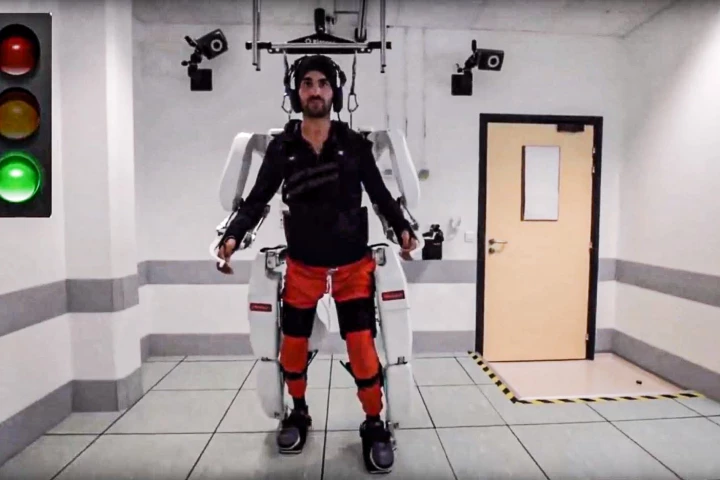 Scientists from the University of Grenoble have spent two years teaching a quadriplegic man to move his arms and legs, and even walk, using a brain-controlled AI exoskeleton.
 -
 Some jobs on Ford's automotive assembly lines require workers to be constantly reaching overhead, and a whole day of doing so can really take a toll on the body. That's why the motor company has recently partnered with Ekso Bionics to trial an upper-body exoskeleton known as the EksoVest.
 -
 What do you do if you're a Japanese car maker facing an aging population that needs more help getting back on their feet than behind the wheel? If you're Toyota, you turn this problem into an opportunity and develop a robotic system to help them regain the use of their legs.
 -
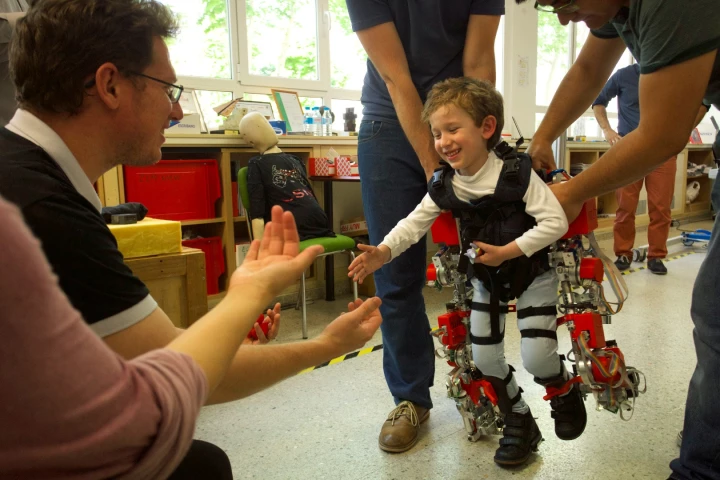 When we think of mobility-enhancing exoskeletons, we tend to picture them being worn by adults. Spanish engineers, however, have developed one that's designed specifically for kids. Not only does it help disabled children to walk, but it may also even save their lives.
 -
 Scientists have created an implantable brain-machine interface that may soon allow people with spinal cord injuries the ability to walk again using the power of their own thoughts.
 -
 Duchenne muscular dystrophy causes the victim's muscles to shrink throughout their lifetime, often to the point that the arms and legs can't be used at all. That's why the A-Gear project is designing two arm-worn exoskeletons, intended to help Duchenne patients retain the use of their arms.
 -
 When we hear about exoskeletons, chances are that we either think of something that allows disabled users to walk again, or that gives wearers extraordinary strength. The AXO Suit project, however, is aimed at creating something else – an exoskeleton that simply allows seniors to stay active.
Load More