
Europe
-
 Deep in the growth rings of Pyrenean trees lies the strongest evidence yet for what set the Black Death in motion – a direct link between a sudden climate shift and the plague’s arrival in Europe, where it killed millions between 1347 and 1353.
 -
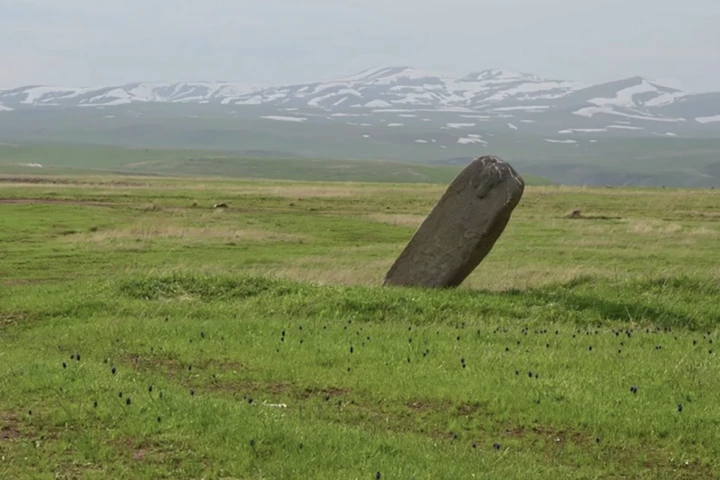 Archeologists say they have solved the 6,000-year-old mystery of Armenia’s “dragon stones" – massive carved monoliths scattered across high-altitude slopes and pastures where no ancient settlements ever existed. It's a story of worship and water.
 -
 Each day we’re learning of new, devastating impacts of climate change, and what's now brewing has researchers sounding the alarm on the future of European beer, thanks to a steady decline in the quality and quantity of high-quality hops from the region.
 -
 Ötzi the Iceman is one of the most well-studied individuals in human history, but there always seems to be more to learn about him. A new genomic study has now found that he looked very different from the way previous studies had imagined him.
 -
 Paleontologists have discovered the fossil remains of one of the largest turtles that ever lived. Measuring about the size of a Volkswagen Beetle, it roamed the seas of Europe during the age of the dinosaurs.
 -
 Scientists have sequenced the genomes of two ancient skeletons and found the oldest human DNA in the British isles. The data reveals the story of two separate migrations of early humans into what is now the UK, and how these different cultures lived.
 -
 A new report has estimated more than 10 percent of all cancer cases in Europe are likely caused by environmental and occupational exposure to pollution. The report indicates most of these cases could be prevented by improving environmental protections.
 -
 Scientists have confirmed that facial deformities among the House of Habsburg were caused by inbreeding, according to a newly-published study. The twist: they reached their findings by studying paintings. The influential Austrian royal line produced European rulers between the 14th and 20th centuries.
 -
 The latest update to the human migration story comes from the Greek island of Naxos, where new archaeological finds show that humans and Neanderthals have occupied the site for around 200,000 years – far earlier than previously believed.
 -
 Fossilized human skulls found in a cave in Greece may force a rewrite of the human migration timeline yet again. Archaeologists have dated one of the skulls to about 210,000 years old – roughly 150,000 years older than the previous record-holder for earliest modern human remains in Europe.
 -
 An academic from the University of Bristol in the UK has reportedly cracked the codex behind the so-called Voynich code. The language used in the 200-page manuscript has remained a mystery since it came to light more than a century ago.
 -
 The official definition of a kilogram may be redefined this week. After years of debate and discussion, scientists from around the world are meeting in Paris on Friday to vote on whether the kilogram, the mole, the ampere and the kelvin should be changed to more stable and reliable definitions.
Load More