
Energy Efficient
-
 Researchers at the University of South Florida believe they have found the answer to how jellyfish and eels propel themselves so efficiently. Rather pushing against the water, the animals actually suck water toward them.
 -
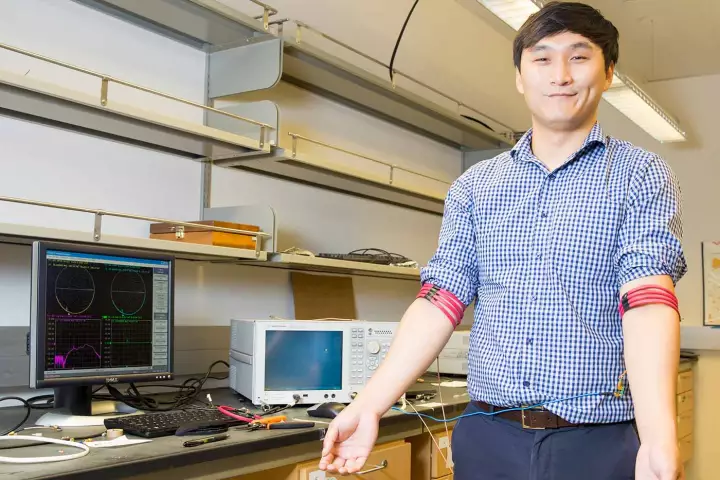 Engineers have come up with a different type of wireless communication that sends ultra low-power magnetic fields through the human body. This makes it extraordinarily more energy efficient and secure from prying eyes than comparable wireless communication technologies.
 -
 A team of scientists from the US Department of Energy’s Lawrence Berkeley National Laboratory has demonstrated a robotic muscle with 1,000 times more power than that of a human's, and which has the ability to catapult items 50 times its own weight.
 -
 Boyan Slat, an aerospace engineering student at the Delft University of Technology, is working to combine environmentalism, technology, and his creative outlook to get rid of plastic debris in our oceans.
 -
 Researchers at the University of Toronto say they can improve the energy of efficiency buildings by fitting window panes with tiny channels of water. The scientists says that these channels can provide 7º to 9º C of cooling in the summer and reduce heat loss during winter.
 -
 Washed up dead seaweed known as Neptune balls is being converted into building insulation.
 -
 Brazilian company Ecobeneficios has designed an app that turns a computer's camera into a presence sensor that switches off the monitor when the user walks away.
 -
 A new, small-scale solid oxide fuel cell (SOFC) system that boasts a record efficiency of up to 57 percent could be used for household and neighborhood power generation.
 -
 Osram Sylvania has been in touch to tell us about its 100 W-replacement LED light bulb, joining its Sylvania Ultra series: a 20 W, 1600 lumen light bulb with a a warm color appearance of 2700 K - the most compelling spec we've seen.
 -
 GE has announced the addition of a 100 W incandescent equivalent to its range of LED replacement light bulbs.
 -
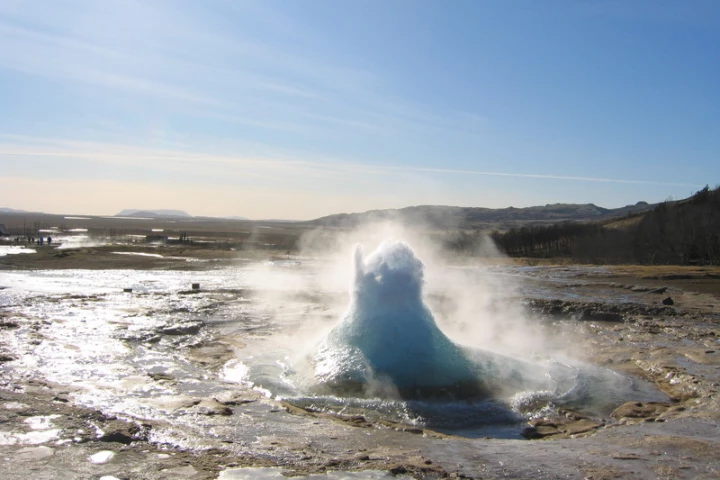 An Icelandic facility is using geothermal energy to store data for colleges in the UK.
 -
 The University of Maryland's WaterShed project has taken the overall winner's title at this year's Solar Decathlon.
Load More