
ECLIPSE
-
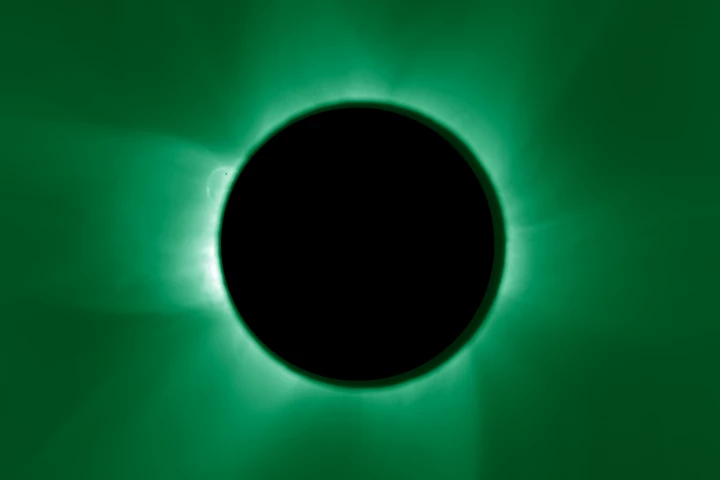 ESA has found a way to make its own solar eclipses more or less on demand and all it took was a pair of robotic spacecraft flying in a formation precise to within a millimeter of each other thousands of miles from Earth. Simple.
 -
 Solar eclipses don’t just look cool – they can send gravity waves rippling through Earth’s atmosphere like dropping a stone in a pond. An international team of students has measured these gravity waves for the first time.
 -
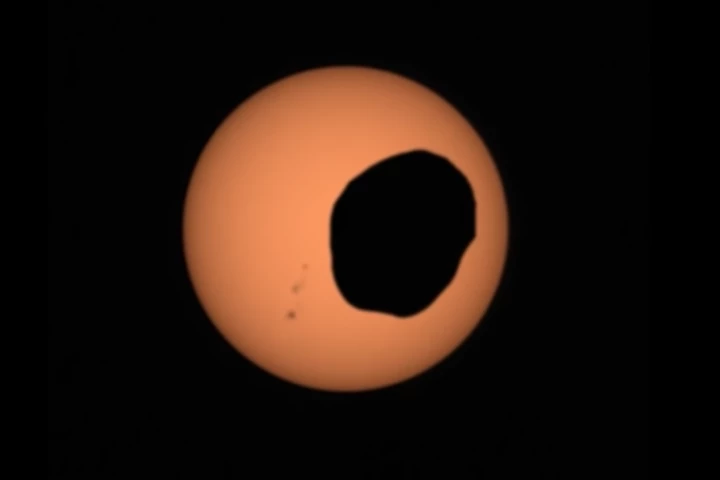 NASA's Perseverance rover has used its advanced camera system to capture the clearest view yet of a solar eclipse on Mars, which will aid scientists in better understanding the behavior of its doomed moon, Phobos.
 -
 Combining elevation data gathered by the Lunar Reconnaissance Orbiter with Earth topography data, NASA researchers have produced the most accurate map ever created for the path of totality of the total solar eclipse that will be seen across a large swath of the United States later this year.