
Ebola
-
 Anyone who has been on the planet for the last four years will know how viruses that evolve to jump across species can rapidly become a serious global crisis. Researchers now believe we're in an alarming new age of vertebrate animal-to-human infections.
 -
 The World Health Organization is rapidly responding to a pair of new Ebola outbreaks in Africa. The two unrelated outbreaks, in Guinea and the Democratic Republic of Congo, have both appeared in locations previously connected to Ebola flare-ups.
 -
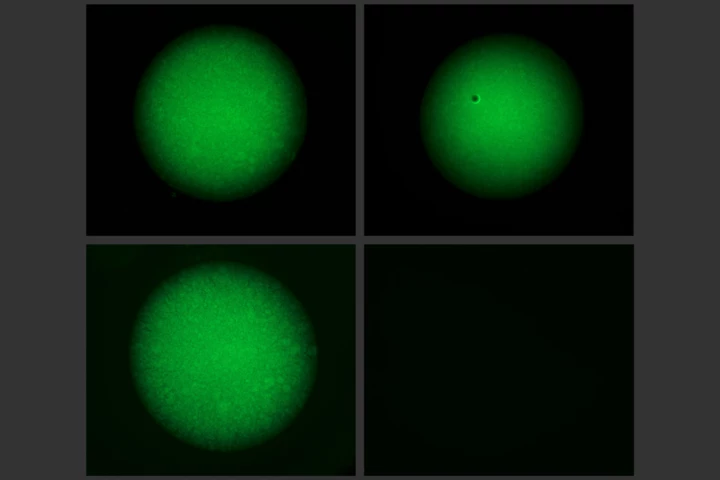 New MIT and Harvard research shows how versatile CRISPR is, putting the genetic scissors to work in diagnostic tools and timed drug delivery systems.
 -
 A new genus of filovirus has been detected in bats in Southern China. The new virus is evolutionarily similar to the notorious Ebola and Marburg viruses, and while there is no current threat of a human outbreak, the researchers suspect it is capable of interspecies transmission.
 -
 Viral infections can be difficult to tackle due to their ability to develop resistance to drugs, and major viruses like Ebola and Zika pose a real threat to global health. Help might well be at hand though, with researchers developing a macromolecule that tackles viruses in three separate ways.
 -
 Researchers from MIT claim to have developed an easy-to-use blood test that can be applied in the field, allowing for the screening of multiple diseases. The test is said to provide results in around 10 minutes, and could be instrumental in stopping the epidemic spread of diseases such as Ebola.
 -
 To make moving and treating Ebola patients safer, Johns Hopkins University along with international health affiliate Jhpiego and other partners are developing a new anti-contamination suit for health care workers that is both cooler to wear and easier to remove.