
ear
-
 Does the feeling of standing up too fast and suddenly getting lightheaded sound familiar? Tracking your blood flow can explain why this is happening, and that’s what sets Lumia 2 apart from other similar energy-management devices.
 -
 Catching the onset of Parkinson's Disease early can be critical to slowing the disease's progression and improving a patient's life. A new test that uses nothing more than a sample of someone's ear wax is set to do exactly that.
 -
 You could compensate for broken speakers by cranking up the volume on others that still work. It turns out that the brain does the same thing when damaged hair cells in the ear lead to hearing loss – and this could be causing your tinnitus.
 -
 A breakthrough clinical trial using gene therapy has restored hearing to five children born deaf. After six months, the children were able to recognize speech and hold conversations, raising hopes for wider use in the near future.
 -
 Back in 2018, scientists at Duke University discovered that each time our eyes move, our ears make an imperceptible squeaking noise. Now, the researchers have developed a method of telling where a person is looking by analyzing those sounds.
 -
 Serving multiple useful purposes, brain-computer interfaces (BCIs) usually incorporate scalp-applied or even brain-implanted electrodes. A new less-invasive BCI, however, can simply be stuck in the patient's ear canal as needed.
 -
 Many of us accept that we’ll naturally lose some hearing as we age, but there may be a way to slow that down. Scientists have identified a mechanism that lets hair cells repair themselves, which could be hacked for therapies that restore lost hearing.
 -
 Nearly 60 years after American folk duo Simon & Garfunkel sang their earworm tune “The Sound of Silence,” three researchers have resurrected the age-old question as to whether the absence of noise is something we can hear and our brains can interpret.
 -
 Earlier this month, Ella, a three-year-old potbelly pig, entered into a surgical procedure at Oregon State University (OSU). Simultaneously, she entered the record books as the first pig to ever have undergone the complete removal of an ear canal.
 -
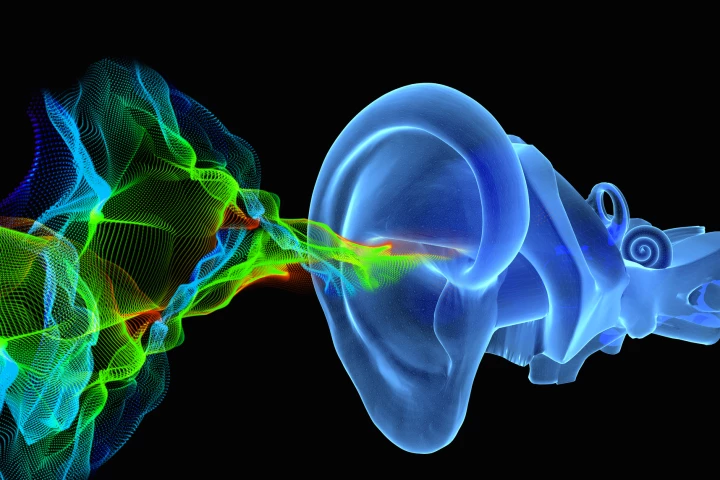 In what’s described as a breakthrough decades in the making, scientists at Oregon State Health & Science University (OHSU) have revealed the inner ear architecture that converts vibrations into sound, in near-atomic detail.
 -
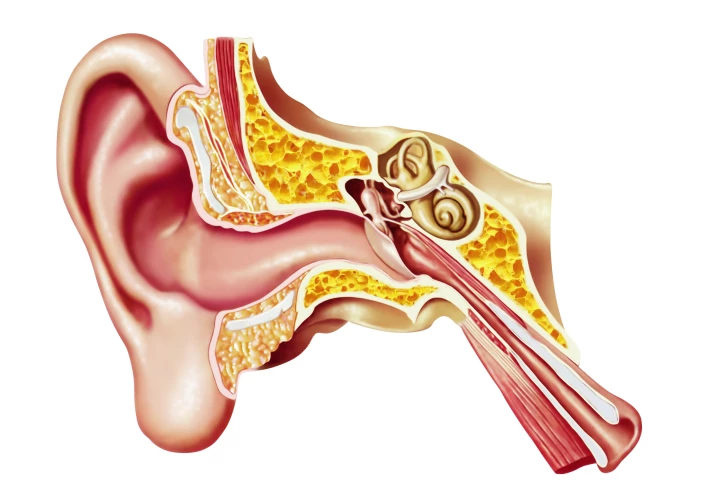 Researchers at the University at Buffalo have used Bluetooth earbuds and a deep learning AI system to diagnose three common ear conditions with a simple, non-invasive audio test that uses a sonar-like audio chirp to map out the ear structure.
 -
 When rescuing avalanche victims or other people in cold, snowy outdoor conditions, it can be difficult to monitor their vital signs via traditional means. The MedSENS device was created with that fact in mind, as it simply goes in the ear and gets strapped to the head.
Load More