
Display
-
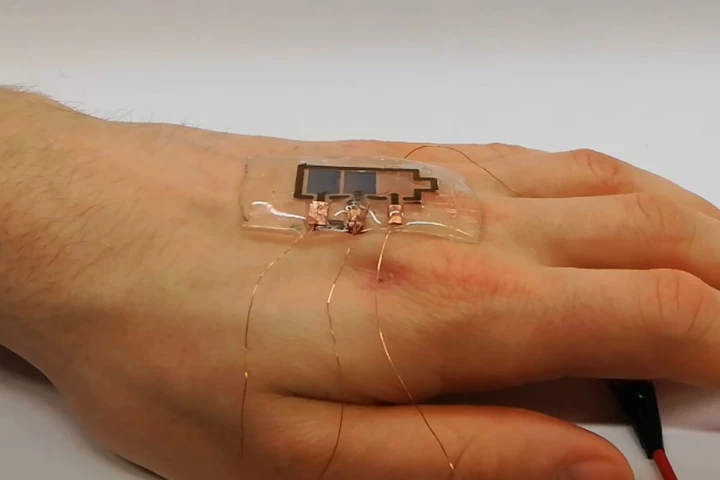 E-waste is a growing problem, so if an electronic component can't be reused or recycled, it should at least be biodegradable. That's where an experimental new electronic display comes in, as it can be composted when no longer needed.
 -
 If there's one thing that sci-fi movies love, it's the idea of 3D displays that people can view from different angles. Well, researchers have created a system in which lasers are used to create bubbles, which in turn make up 3D images within a column of liquid.
 -
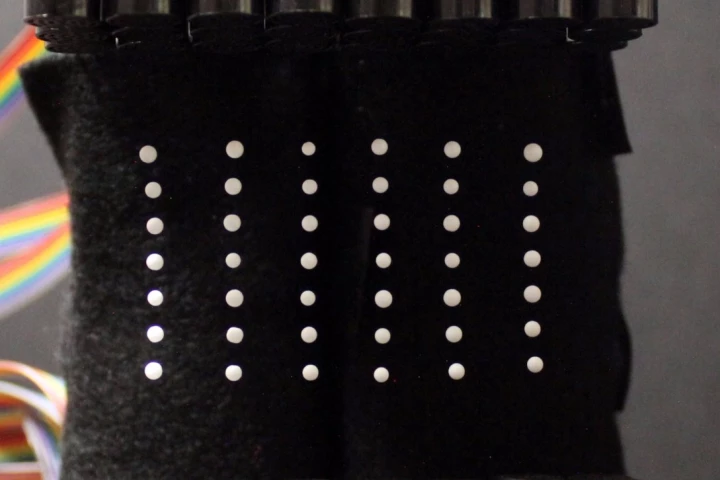 We've already seen sound waves being used to levitate small numbers of foam balls, but scientists have recently taken things a step further. They've created a low-res "display" in which the pixels are actually physical spheres that float and can be individually rotated in mid-air.
 -
 Researchers from Karlsruhe Institute of Technology (KIT) and Franz Binder GmbH & Co have developed a new manufacturing process to print EL panels directly onto the surface of almost any convex and concave shape. Even, apparently, onto spheres.
 -
 Researchers at the Pusan National University in South Korea have developed an advanced light shutter that can rapidly switch between transparency and opaqueness in less than a millisecond, paving the way for displays that become see-through at the flick of a switch.
 -
 Scientists recently determined that the material from which the limpet's teeth are made is officially the world's strongest natural material. Now, a study suggests that a specific type of limpet's shell may hold the key to transparent displays that require no internal light source.
 -
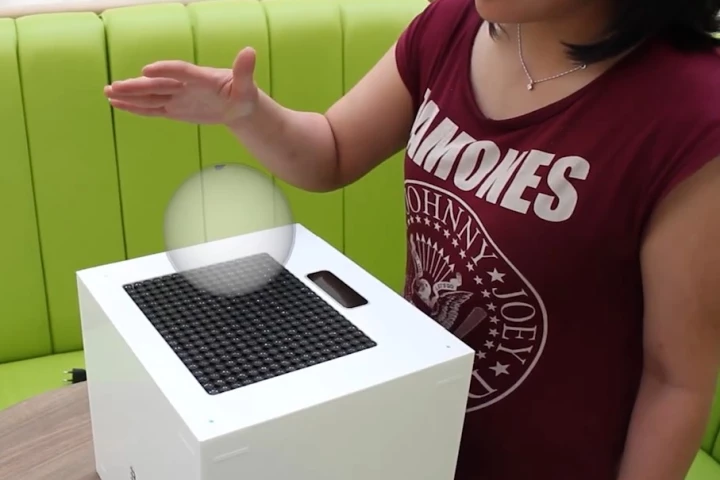 A new technique being developed by researchers at the University of Bristol promises to revolutionize haptic feedback technology by using projected ultrasound to directly create floating, 3D shapes that can be seen and felt in mid-air.
 -
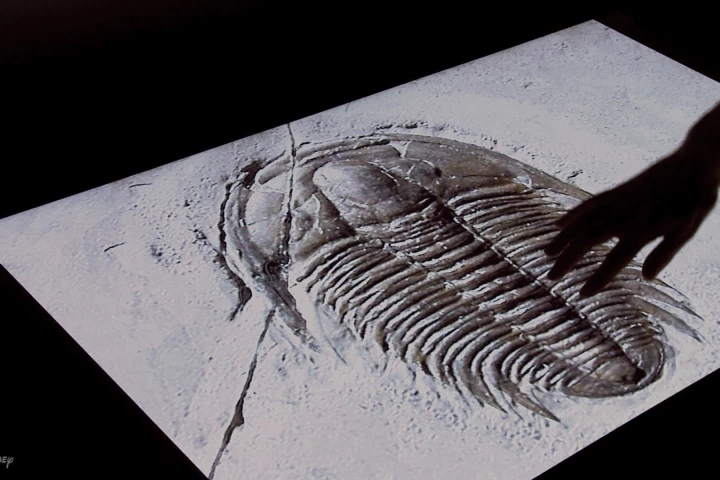 Researchers at Disney Research, Pittsburgh have developed a system that lets users' fingertips feel a simulated bump through a flat tablet or smartphone screen, that corresponds to a bump in the displayed image.
 -
 Sony's new "head-mount image processing unit" gives surgeons virtual X-ray vision by means of an endoscope feeding images to a pair of head-mounted monitors. This setup allows surgeons to view high definition 3D images from inside the patient while carrying out laparoscopic surgery.
 -
 The University of Michigan has "locked in" structural color for stable reproduction in a move that could lead to high resolution reflective color displays.
 -
 SBU's new Reality Deck boasts 416 high resolution screens that provide a total resolution of 1.5 billion pixels, making it what SBU says is the largest resolution immersive display ever built driven by a graphic supercomputer.
 -
 Corning has announced details of a new glass design named Willow Glass, which is reported to have the approximate thickness of a sheet of paper.
Load More