
Diamonds
-
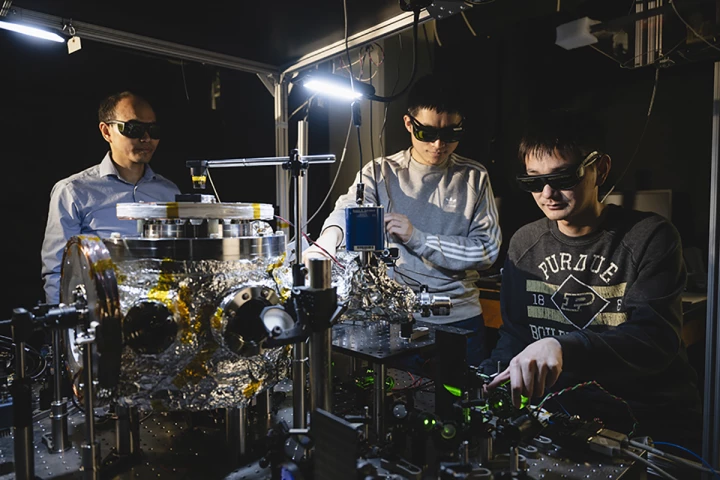 Physicists have levitated nanoscale diamonds, hit them with lasers to make them flash and spun them at an incredible 1.2 billion rpm. The experiments aren’t just about creating the “world’s smallest disco” but could help the study of quantum physics.
 -
 With 2023 drawing to a close, it's once again time to look at the significant, intriguing, and sometimes just plain daft science stories of the year. So, let's dive in and see what the science types have been up to.
 -
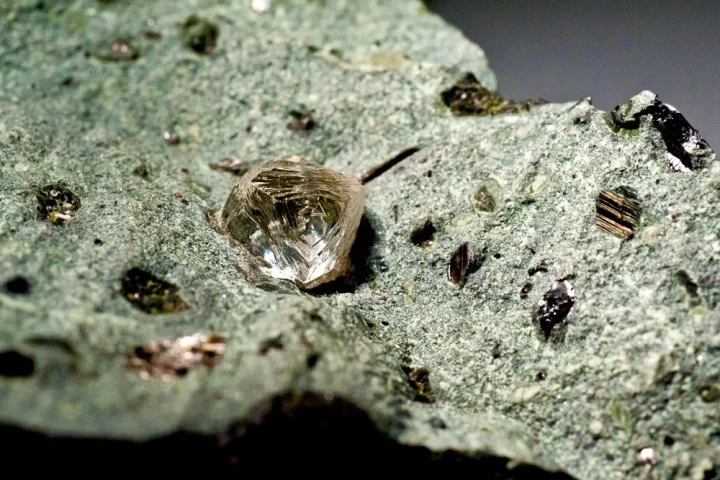 Locating diamond deposits in the earth isn't always an exact science, so the greater the number of methods of doing so, the better. A new study now suggests that soil microbes may point the way to such buried treasures.
 -
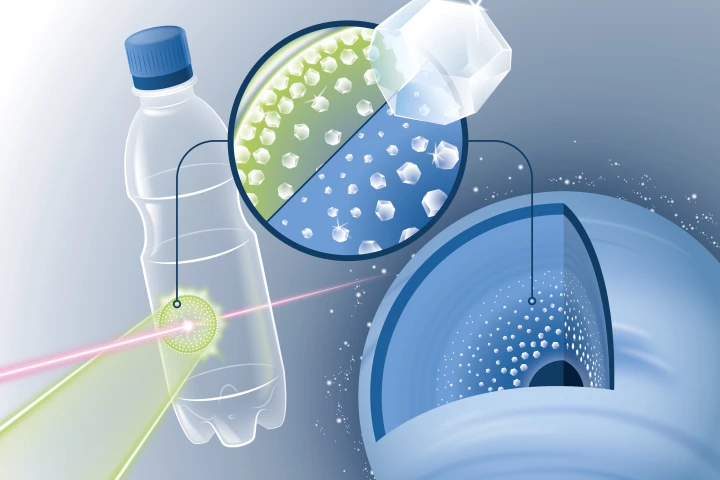 Scientists have turned plastic into diamonds. Using high-powered lasers, the team zapped samples of common PET plastic, which produces intense heat and pressure to form tiny diamonds that may naturally rain down on planets like Uranus and Neptune.
 -
 Arkenlight and Axorus have teamed up to prototype the first artificial neuron powered by a diamond betavoltaic battery made from nuclear waste. The goal is to develop medical-grade implants with energy sources that will last decades without charging.
 -
 Geologists have studied tiny fluid impurities in diamonds to figure out how old humanity’s favorite rocks might be. They identified three periods of diamond formation in Africa over billions of years, with intriguing implications for ancient Earth.
 -
 Exotic forms of carbon were predicted to exist under extremely high pressures. But in a new study researchers have examined carbon under the highest pressure ever studied in the lab, and found that diamond sticks around much longer than expected.
 -
 There’s no such thing as random in classical physics – for true randomization you need to turn to quantum physics. Now scientists have done just that, creating secure encryption keys based on the genuine randomness of quantum vibrations of diamond.
 -
 Perhaps on other planets, diamonds are as common and boring as rocks. Astronomers suggest that some planets might actually be largely made of diamonds, and now a team has calculated how such a planet could form and how it would be structured.
 -
 Researchers have now found evidence that some of the world’s most impressive gems, such as the Hope Diamond and the Cullinan – which adorns the Crown Jewels – originated much deeper in the Earth’s mantle than previously thought.
 -
 Nanothermometers, while not a brand new idea, are still at the cutting edge of science. We've seen impressive results to date, but accuracy and resolution can always improve, and this is what researchers from the University of Technology Sydney in Australia believe they've achieved.
 -
 The next blow to Big Diamond might have just arrived. Using sound waves, geologists have discovered a gigantic stash of the so-called precious stones deep in the Earth's interior, possibly to the tune of a quadrillion tons.
Load More