
Debris
-
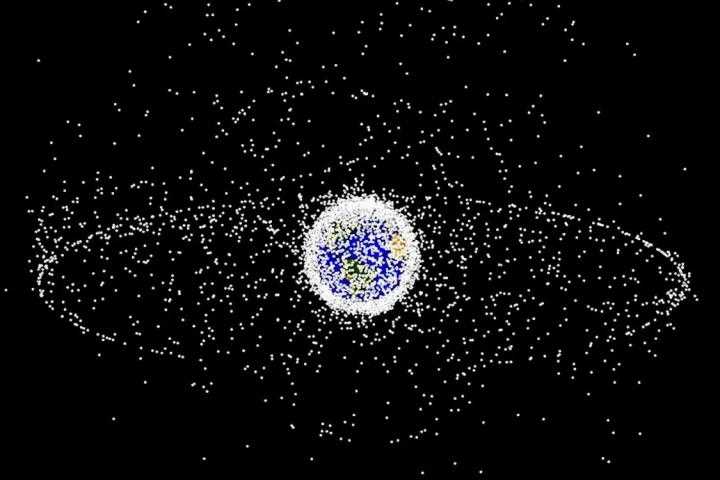 Tiny bursts of electrical energy caused by collisions of objects no wider than a pencil lead could one day allow pieces of space debris smaller than one millimeter in diameter to be tracked, reducing the danger to spacecraft in Earth orbit.
 -
 A team of ESA scientists has developed a way to use lasers, special telescopes, detectors, and light filters tuned to specific wavelengths to increase contrast with the sky and accurately track space debris even in broad daylight.
 -
 Space debris is a serious problem that won’t be going away anytime soon, but researchers have put forward a novel way to keep things in check, making a case for charging satellite operators an “orbital-use fee” to reduce the risk of collisions.
 -
 Space has the prospect of one day getting a bit cleaner as a satellite harpooned a piece of simulated debris in low Earth orbit. The RemoveDEBRIS technology demonstrator deployed a target panel at the end of a boom, then skewered it with a metal harpoon traveling at 20 m/s (44.7 mph, 72 km/h).
 -
 Dutch artist and designer Daan Roosegaarde has a knack for raising environmental awareness through spectacular and symbolic pieces of art, and his freshly launched Space Waste Lab might be his most impressive installation yet.
 -
 A team of researchers has come up with plasma beam that can push space debris out of orbit. Mounted on a satellite, the two-way facing beam is produced by a bespoke ion thruster that uses its discharge to decelerate debris so it can burn up in the Earth's atmosphere.
 -
 Technology designed to clean up space has captured its first bit of simulated space debris in orbit. Part of the RemoveDEBRIS mission, a balloon acted as a target for the RemoveDEBRIS satellite, which fired a weighted net from a range of seven meters (23 ft) and successfully snared the "debris."
 -
 Space may be big, really big, but Earth orbit is getting a bit crowded. NASA is set to install a new sensor on the ISS where it will spend the next two to three years monitoring space debris to learn more about its characteristics.
 -
 Stanford University and have come up with a robotic gripper that's based on the sticky pads of the gecko. The difference is that instead of helping a lizard to stick to window panes, this gripper is designed to gently latch onto dead satellites and other debris.
 -
 An ESA-funded scientist is developing a magnetic space tug to combat the growing problem of space debris. Using cryogenic magnets, the tugs could lock onto derelict satellites and deorbit them before they become a hazard to navigation.
 -
 ESA has provided a preview of its plan to net space debris by unveiling a prototype net gun designed to envelope and capture tumbling dead satellites. A small version of the gun targeted and took down a low-flying drone at the Industry Days event for ESA's Clean Space initiative.
 -
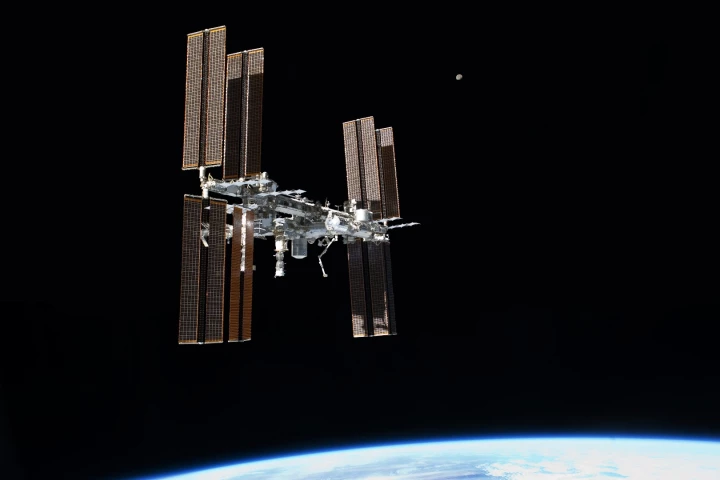 For the fourth time in its history, the crew of the International Space Station (ISS) had to temporarily take shelter in their "lifeboat" as a piece of space debris passed the station today at 8:01 am EDT.
Load More