
Dawn
-
 Fresh research has been published detailing the processes responsible for the creation of the enigmatic features marking the surface of the dwarf planet Ceres, including the bright spots at the famous Occator Crater, and the so-called "lonely mountain."
 -
 Two new studies have used data gathered by NASA’s Dawn mission to determine that the dwarf planet Ceres’ salty, icy crust could be the remains of an ancient global ocean – and there may still be some liquid water locked up deep beneath the surface.
 -
 One of the weirdest features of the dwarf planet Ceres is a series of bright spots in the center of the large Occator crater. New research suggests the bright material is actually much younger than the rest of the crater and that the central dome could be the result of cryovolcanic activity.
 -
 NASA's Dawn deep-space probe has discovered ice inside the eternally shadowed craters of the polar regions of the dwarf planet Ceres, where it survives in the crater interiors thanks to the extreme cold there.
 -
 Scientists may have discovered an ideal site for a new salt mining operation, but extracting the abundant resource would require a little travel, as it's located on Ceres, the largest body in the asteroid belt.
 -
 NASA's Dawn spacecraft has succeeded in capturing the most detailed views to date of the solitary mountain nicknamed Ahuna Mons, discovered on the dwarf planet Ceres.
 -
 Since December, NASA's Dawn spacecraft has been as close as it will get to the surface of Ceres, the largest object in the asteroid belt. The space agency has now released most comprehensive video tour yet.
 -
 NASA has released a global color map of the dwarf planet Ceres showing the highs and lows of topography on the rocky body's surface. The new map comes with new official names for many of the craters and other geological features dotting the surface of the planet.
 -
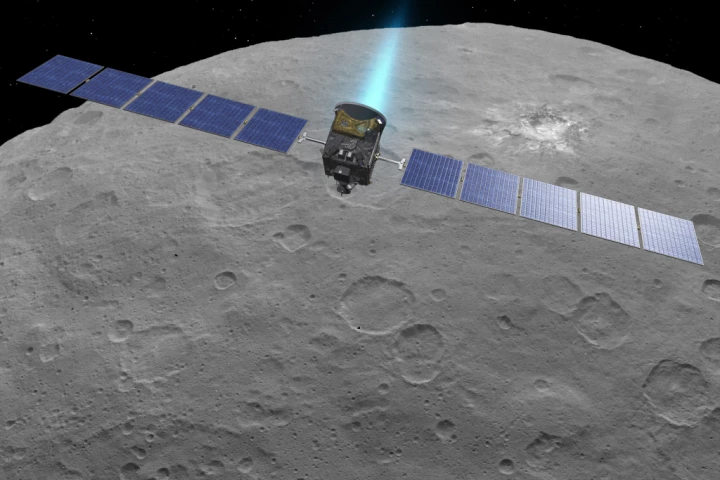 Having already provided us with numerous insights into the nature of the dwarf planet Ceres, NASA's Dawn spacecraft is ready to move into a new, lower mapping orbit, which will provide the most detailed views so far.
 -
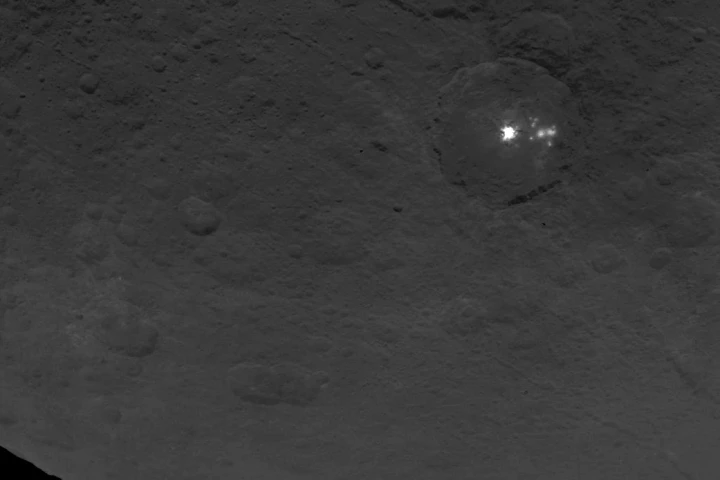 Fresh images snapped by NASA's Dawn spacecraft have provided a clearer look at the enigmatic white spots that mark the surface of the dwarf planet.