
CubeSat
-
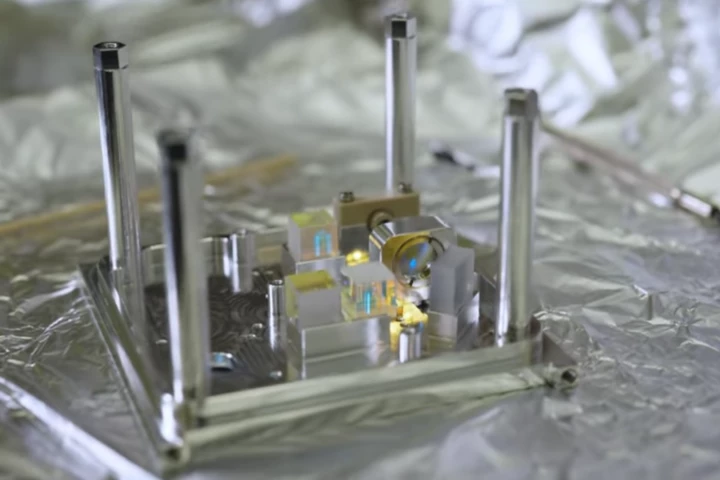 Dark matter is thought to outnumber regular matter by a factor of five to one – so why can’t we find the stuff? A new study proposes looking for it from space, using a satellite containing a levitating piece of graphite and a laser.
 -
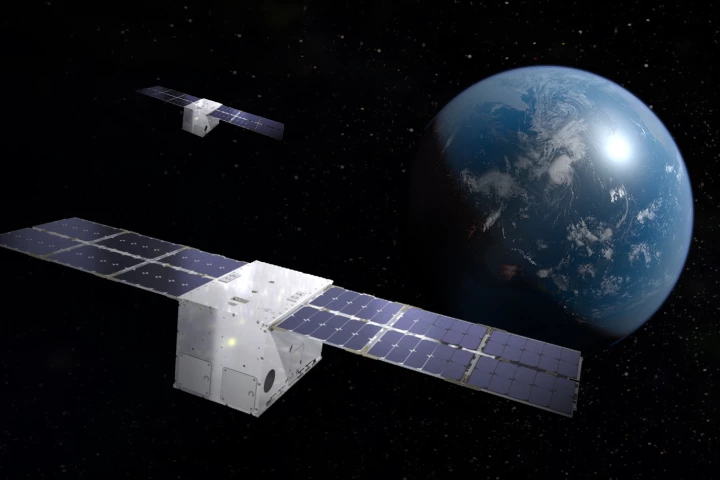 In an autonomous orbital ballet, Lockheed Martin's In-space Upgrade Satellite System completed a demonstration of how highly automated CubeSats can upgrade and service increasingly common constellations of small satellites.
 -
 A student-built CubeSat will investigate whether satellites can be maintained in low Earth orbit without thrusters or propellant. The Miniature Tether Electrodynamics Experiment-1will test using the Earth's magnetic field to generate thrust.
 -
 After launching into orbit aboard SpaceX’s Falcon Heavy rocket last month, The Planetary Society’s LightSail 2 satellite has now entered the most critical phase of its mission, successfully unfurling its solar sail and starting to surf through space on the power of the Sun.
 -
 Remember the garbage-collecting Oscar the Grouch, from Sesame Street? Well, an orbital-debris-gathering spacecraft now bears his name. Known as OSCaR ("Obsolete Spacecraft Capture and Removal"), the semi-autonomous craft is currently being developed at New York's Rensselaer Polytechnic Institute.
 -
 Lockheed Martin is rolling out a new class of CubeSat that can be reprogrammed in orbit like a smartphone to take on new missions. The new SmartSat technology is being integrated into over 10 satellite programs to start with and the prototypes will be launched this year.
 -
 NASA is poised to send larger and larger telescopes into space over the next couple of decades and a team of researchers at MIT is working out how to use laser-equipped CubeSats to keep them fixed on target.
 -
 NASA's Venture Class Launch Services program aims to use a new breed of smaller rockets to let CubeSats ride in luxury on their own personal, purpose-built spacecraft. The agency has now carried out its very first launch as part of this endeavor.
 -
 When the latest Cygnus cargo mission to the SS lifts off, its manifest will include three CubeSats, including the first equipped with radar. The size of three cereal boxes and weighing only 26 lb (11.8 kg) each, the miniature satellites will be used to demonstrate new technologies in orbit.
 -
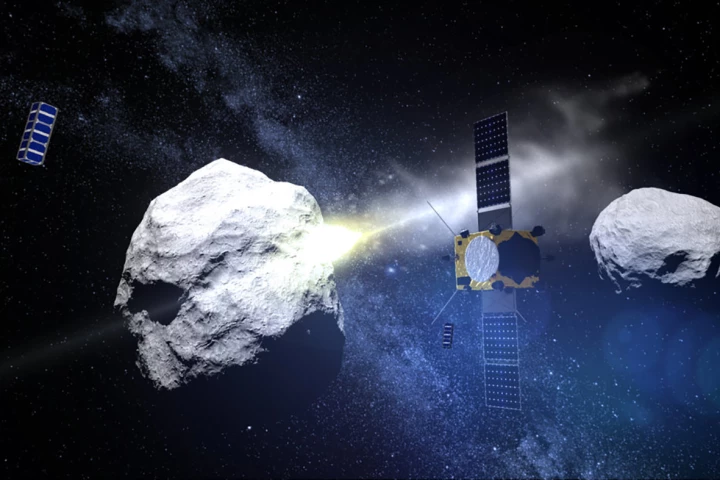 ESA has shortlisted five concepts missions for its AIM mission, including projects that plan to study asteroid composition, measure their gravity field, and much more.
 -
 One of the first of the first deep-space CubeSats may be shoebox-sized satellite called Lunar IceCube, which is designed to look for water ice and other resources on the Moon and is tentatively aimed to launch on the first Orion mission scheduled to fly by 2018.
 -
 The Planetary Society today confirmed that its LightSail satellite has successfully deployed its Mylar solar sail, achieving the main objective of the mission after 19 days in low-Earth orbit. The CubeSat completed transmission of its first image showing the sail open and partly spread out.
Load More