
CSIRO
-
 If you're among the half of US adults who have tried to lose weight in the last year, you'll know how enthusiasm wanes when you hit the inevitable "plateau." New research shows that this is an adjustment period, and long-term success is over the hill.
 -
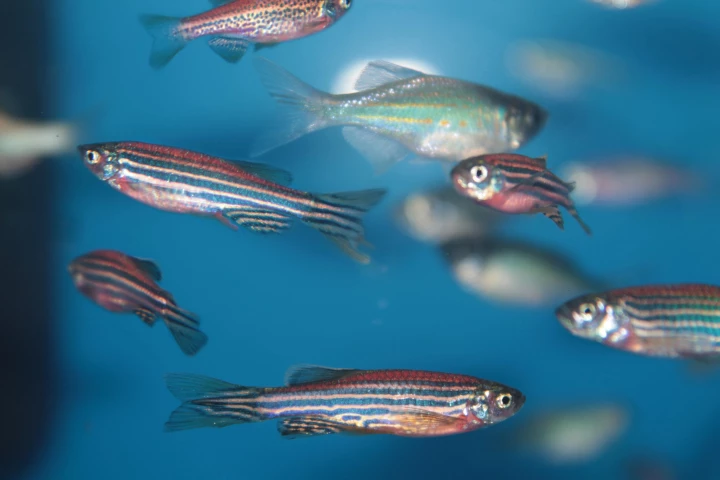 Methylmercury is an extremely toxic compound, and unfortunately it's often present in the fish that we eat. Scientists are now developing a method of removing it from the environment, utilizing engineered fish and flies that take up the compound and neutralize it.
 -
 In one of the most amusing citizen science projects we've ever seen, Australia's top research agency is asking its citizens to hit the gas and flag their flatulence in hilarious detail over three days, tracking toots on the Chart Your Fart app. Superb.
 -
 The fertilizer used on around half of the food we consume is now one of the biggest drivers of human-made greenhouse gas emissions, with China, India, the US, Brazil and Russia the biggest polluters, according to a new global nitrous oxide report.
 -
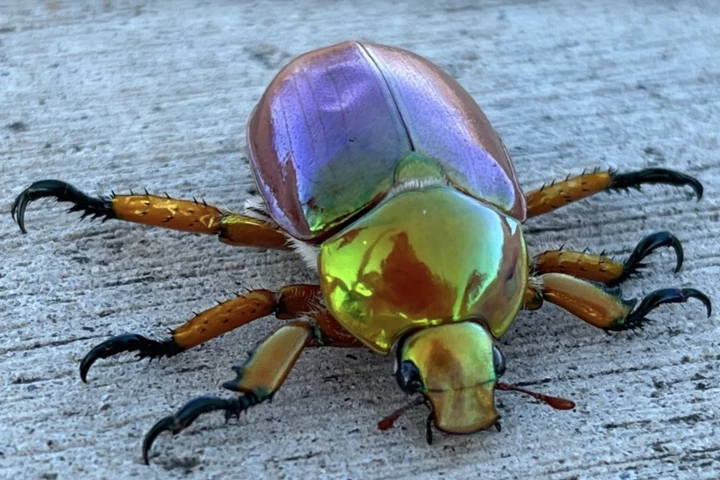 As Australian as kangaroos, the Christmas beetle holds a special place in hearts Down Under. But December sightings of these majestic creatures have become as rare as seeing Santa. Scientists are now asking the nation to help them find out what's going on.
 -
 From monitoring a deadly disease in endangered Tasmanian devils in real time, to tracking wildlife recovery after devastating bushfires that claimed the lives of up to three billion animals, AI has the potential to change the world for good.
 -
 Globally, micro- and nanoplastics and plastic additives are widespread across our food supply. While we have an understanding of how they get there, there remains a massive gap in what we know about their effects on our health.
 -
 What do you do if a South American weed is choking up your local Australian waterways? In the case of the cabomba plant, scientists are enlisting the help of the weed's natural South American enemy, the tiny cabomba weevil.
 -
 Models of the universe predict that supernova remnants should be far more common than they are. Now, a new image from sensitive radio telescopes reveal that the missing remnants are hiding in plain sight.
 -
 If you’ve seen the first images from the James Webb Space Telescope this week, you might have heard the term “gravitational lensing” being thrown around. But what does it mean exactly? And how can it help this new telescope make discoveries?
 -
 Astronomers may be a step closer to solving a cosmic mystery known as odd radio circles. New images, captured by the MeerKAT radio telescope, are the clearest and most detailed yet taken, narrowing down the list of suspects as to what creates them.
 -
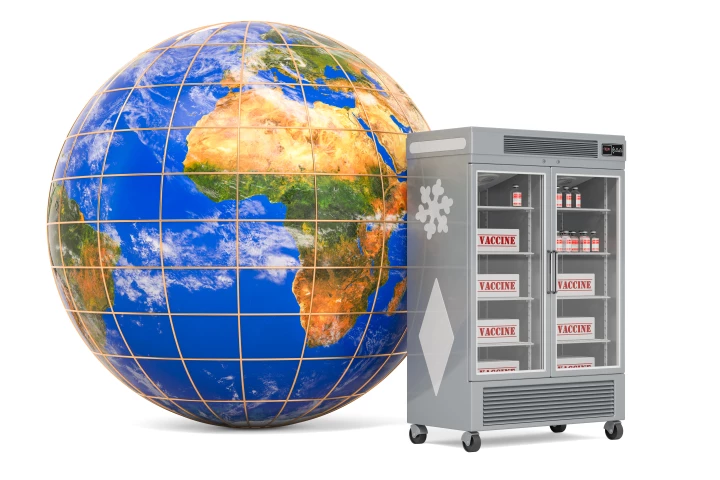 Researchers at Australia’s CSIRO have demonstrated a method for protecting the integrity of vaccines against high temperatures. A proof-of-concept study has shown the method keeps vaccines viable at temperatures up to 37 °C (98 °F) for three months.
Load More