
Cryogenics
-
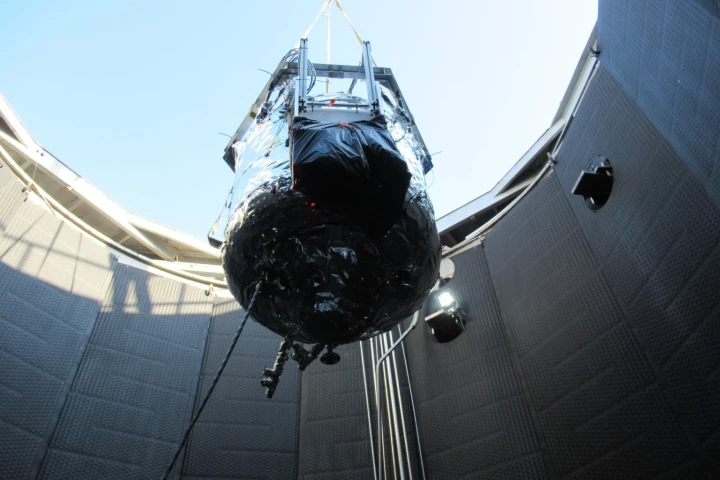 NASA has tested a kind of super-fridge that may hold the key to any future crewed mission to Mars. Without the new cryogenic cooler, a ship to Mars would reach the Red Planet with empty fuel tanks, which would ruin everyone's day.
 -
 Researchers have found a surprisingly simple way to build cryogenic coolers that reach near-absolute zero up to 3.5 times faster, or using about 71% less energy, than current gear. That's big news for anything requiring seriously low temperatures.
 -
 Scientists have performed the first successful transplant of an organ that had been cryogenically frozen and rewarmed. Rats that were given transplants of kidneys preserved through a new technique regained regular organ function within weeks.
 -
 Getting an organ from donor to recipient is a race against time, with many going to waste. Now, researchers in Australia have identified new cryoprotectants that could preserve organs and tissues for much longer without damaging them.
 -
 The ISS is slated to become the coldest spot in space as NASA's Cold Atom Laboratory begins producing ultra-cold atoms that are cooled to 10 millionth of one Kelvin above absolute zero as part of microgravity experiments to study quantum mechanics and the fundamental nature of matter.
 -
 If science is going to reduce a person to a 3-D map of physical structures, at least we can take solace in the fact that it's an incredibly complex map. Let's take a quick look at the emerging science of connectomics, the dense mapping of brain neurons, and how it's leading to better cryonics.
 -
 While deep-freezing techniques exist to preserve organs for long periods of time, the tissue can get damaged when being reheated, making it an impractical solution for transplants. Researchers at the University of Minnesota believe they've solved this problem thanks to tiny microscopic particles.
 -
 As part of the quest to come up with a room temperature superconductor, researchers from the Max Planck Institute for Chemistry and Johannes Gutenberg University Mainz have developed new record high-temperature superconductor – and it smells like rotten eggs.