
Counterfeiting
-
 With an industry expected to be worth US$100 billion by 2030, a supply crisis, slow manufacturing processes, and a high price tag, it's no surprise the much-hyped class of injectable weight-loss drugs has become a prime target for counterfeit trade.
 -
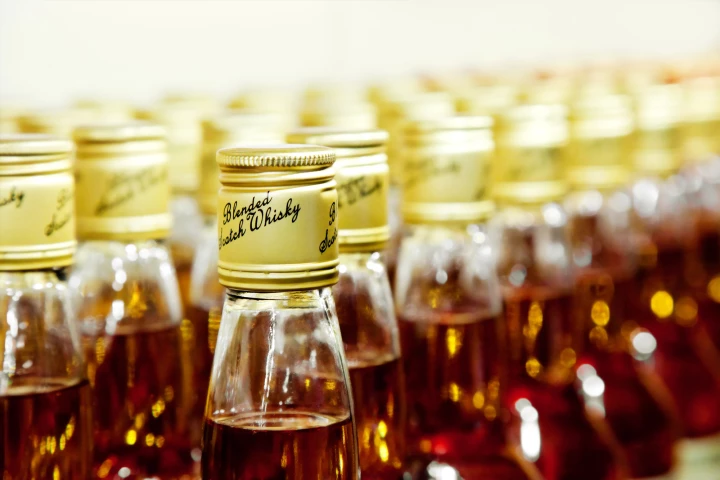 A team of scientists at the University of St Andrews has developed a laser spectroscopy technique that can determine the authenticity of expensive vintage whiskey without having to open the bottle to retrieve a sample for analysis.
 -
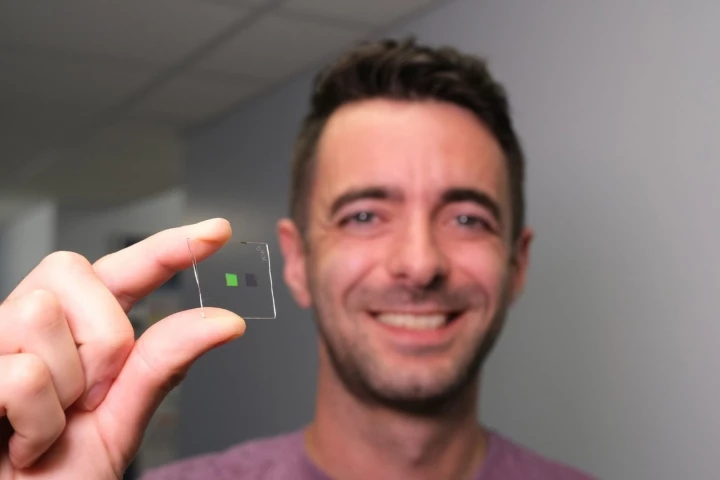 A tiny artificial tongue which can identify individual whiskies by taste has been invented by a team of Scottish engineers . The device could mean big things for drink makers wanting to ensure a consistent product, and protect their precious brands from counterfeiters at the same time.
 -
 In developing nations, unscrupulous companies routinely produce counterfeit or diluted antibiotics. Unfortunately, those same countries often lack the expensive lab equipment needed to detect fakes. There could be hope, however, in the form of a simple new paper device.
 -
 Serving counterfeit liquor is not only unethical, but depending on the contents of that liquor, can also be dangerous to the people consuming it. It was with this in mind that scientists recently developed a portable device that can tell fake booze from the real thing.
 -
 Different types of whiskies can be chemically very similar, to the point that standard tests sometimes can't tell them apart. With that in mind, researchers have developed what's being described as a synthetic tongue – it scientifically differentiates between whiskies via their "flavor."
 -
 Is that a real Rolex, or a fake? Thanks to research currently being carried out at Switzerland's Ecole Polytechnique Fédérale de Lausanne (EPFL) research institute, an ultraviolet lamp may soon be all that you need to tell the difference between luxury watches and knock-offs.
 -
 Security holograms can currently take days to create, using expensive equipment. That could be about to change, however, as scientists have developed a hologram production method that utilizes a regular inkjet printer.
 -
 British scientists have already looked to principles employed by butterfly wings, as a means of thwarting currency counterfeiters. Now, researchers from China's Southeast University have developed another such technology, that's inspired by a different insect – a color-changing longhorn beetle.
 -
 A durable nanomaterial that uses a consumer's breath to reveal a hidden image is the result of research that could lead to new counterfeit prevention techniques, which are unable to be mimicked by outsiders.
 -
 Scientists at the Technology Transfer Unit of Portugal's University of Aveiro are developing DNA "barcodes" that can be applied to products, then subsequently read as a means of identification.