
Concrete
-
 A new type of carbon-neutral concrete has been commercially used for the first time, in a skyscraper being built in Manhattan. The binder utilized in the concrete is made of granite instead of traditional greenhouse-gas-emitting limestone cement.
 -
 According to some estimates, the generation of the heat used to produce traditional portland cement is responsible for 5% to 8% of all human-made CO2 emissions. A new substance known as C-Crete, however, is claimed to be a much greener alternative.
 -
 The production of the cement is a major source of greenhouse gas emissions, which is why some people have tried replacing it with fly ash. A new technique makes that fly ash more eco-friendly, resulting in concrete which is greener and stronger.
 -
 Even if environmental factors such as ocean acidification can be addressed, our decimated coral reefs will still need some help growing back. That's where a "Lego-like" system known as 3D Innoreef is designed to come in.
 -
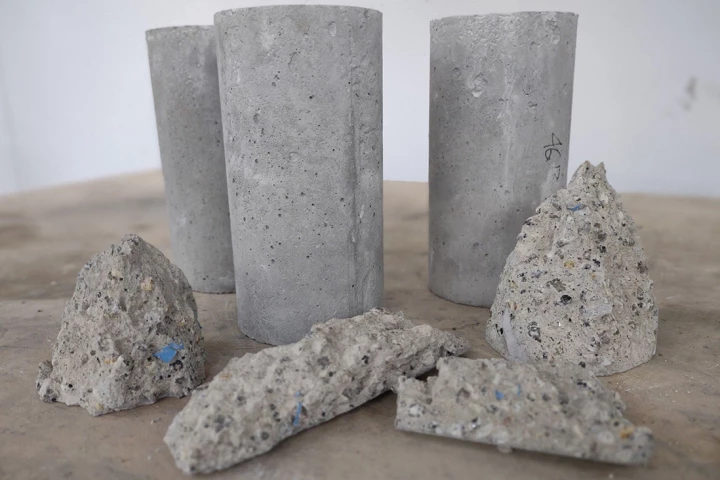 RMIT scientists are looking to help tackle the mounting waste generated by the ongoing pandemic, by demonstrating a form of concrete that incorporates shredded personal protective equipment (PPE) for improved performance.
 -
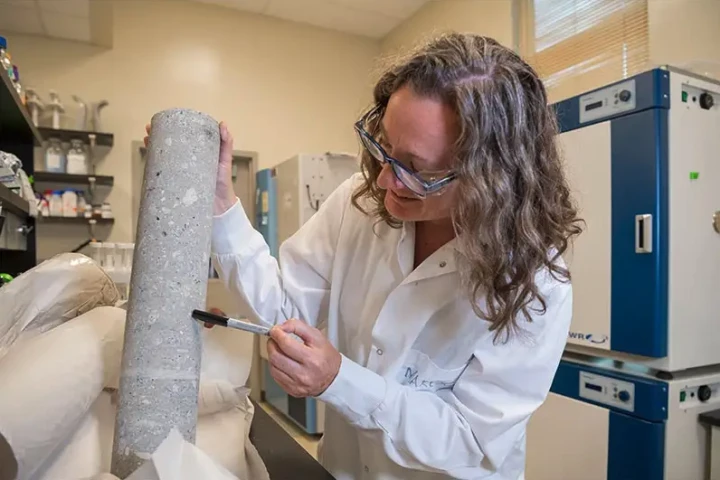 Concrete may not seem welcoming, but bacteria do live inside it. A new study has examined this concrete microbiome to find out how they get there, how they change over time, and how we might use them in future to monitor or even repair defects.
 -
 A six-year competition to capture CO2 emissions from operational power plants and convert them into useful products has drawn to a close, and produced dual winners with technologies that promise to reduce the environmental footprint of concrete.
 -
 Steel slag is currently utilized both to treat wastewater, and as a concrete aggregate. New research now indicates that using it for the former makes it perform even better as the latter – so the same slag could be used twice.
 -
 Production of cement is a big source of CO2 emissions, so the more we can recycle existing concrete, the better. That's where a new study comes in, which indicates that discarded concrete becomes stronger than it was before, when wood waste is added.
 -
 Concrete is made of a combination of cement, an aggregate such as gravel, and water. If that mixture dries too fast, then cracks can form within it as it cures. Now, however, scientists have determined that the use of coal-ash spheres can help keep that from happening.
 -
 Although glass is thought of as being eco-friendly because it's recyclable, the fact is that a lot of it doesn't get recycled. Now, however, scientists are suggesting that glass waste could be used to make concrete that's stronger and cheaper.
 -
 Although concrete doesn't burn, it can "spall" when subjected to extreme heat – this means that surface layers of the material break off, potentially causing structures made of it to collapse. According to a new study, however, fibers obtained from discarded tires can help keep that from happening.
Load More