
Computer
-
 Spots and stripes serve many purposes in nature, but how they form has been more of a mystery. Now, researchers have advanced their breakthrough theory – and it could help us design materials that can respond to the environment and change color on demand.
 -
 A new study from Caltech calculates that our brains process information at the extremely slow speed of just 10 bits per second. This leisurely pace may have long evolutionary roots, despite our sensory systems gathering data 100 million times faster.
 -
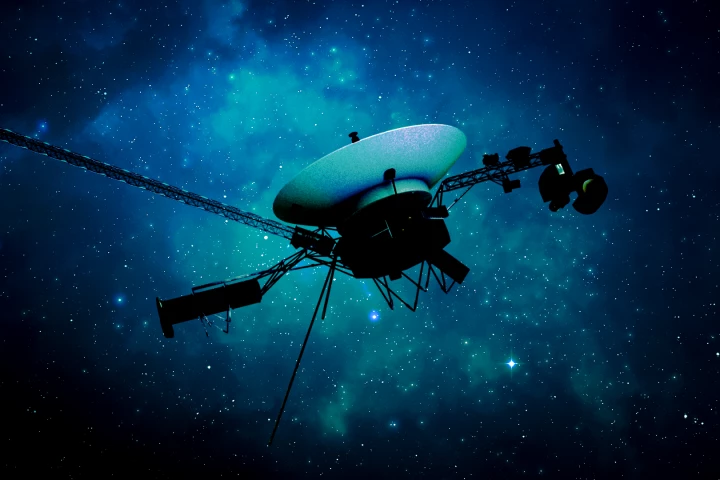 We have to cut the 47-year-old space veteran some slack – it's faring much better than our 2019 laptops – but Voyager 1's five months of communicating nonsense to Earth may be over, thanks to Mission Control's 15-billion-mile remote IT fix.
 -
 NASA engineers have narrowed down the problem with the Voyager 1 deep space probe to a single faulty chip. It may now be possible to work around the corrupted memory and return the 47-year old interstellar spacecraft to an operational condition.
 -
 NASA's Voyager 1 deep space probe may get a new lease on life thanks to an unexpected download from one of its onboard computers. After months of sending back gibberish instead of collected data, the craft may have provided a clue to its salvation.
 -
 Progress on quantum computers may soon stall. Cosmic rays streaming to Earth can interfere with the integrity of information in quantum computers, and now an MIT team has shown just how vulnerable they are and what it might take to protect them.
 -
 Scientists have achieved quantum teleportation between two computer chips for the first time, sending information between them without being physically or electronically connected. The feat opens the door for quantum computers and quantum internet.
 -
 This is the story of the Apollo Guidance Computer that helped the Apollo astronauts safely navigate to the Moon. It was a computer that was so advanced that the engineers who created it said they probably wouldn't have tried to do so if they'd known what they were getting themselves into.
 -
 What happens when the vastly different worlds of modern art and computer malware collide? The answer is an installation called The Persistence of Chaos, and it just sold at auction for US$1.345 million.
 -
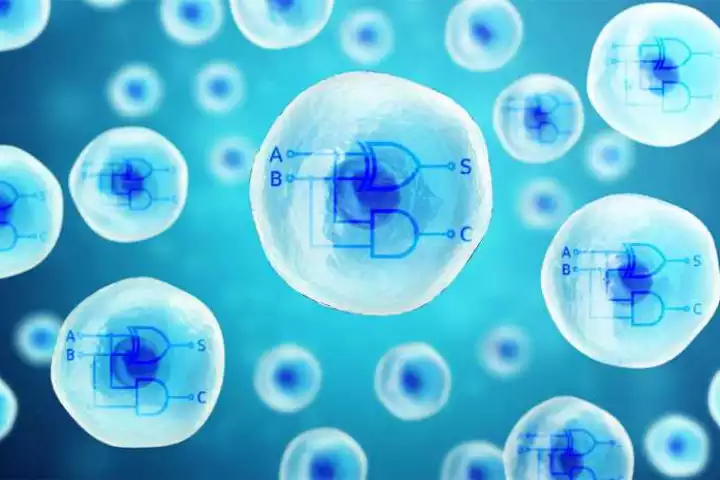 The CRISPR gene-editing system is usually known for helping scientists treat genetic diseases, but the technology has a whole range of possible uses in synthetic biology too. Now researchers at ETH Zurich have used CRISPR to build functional biocomputers inside human cells.
 -
 As Tuesday’s ransomware attack continues to spread, several security analysts are saying that this virus may not be ransomware after all, but is actually a cyberattack in disguise.
 -
 The prices fetched at auction are a useful guide to the perceived societal value of significant historical objects, and the sale of an Apollo Guidance Computer DSKY (DiSplay&KeYboard) for $93,750 this week could not be more illustrative of contrasting views.
Load More