
CNRS
-
 Filter-feeding mollusks respond to water pollution in a very detectable and measurable manner. With that fact in mind, scientists have created a water-quality-monitoring system that uses electronically augmented live mollusks as its sensors.
 -
 Astrophysicists have detected the most energetic electrons ever recorded raining down on Earth. With trillions of times the energy of visible light, these cosmic rays seem to be coming from a powerful source relatively close to our solar system.
 -
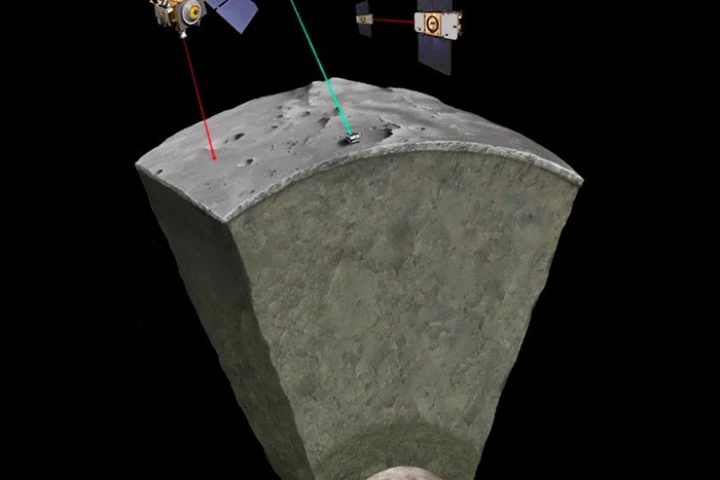 Looking back at data from the geology experiments left on the lunar surface by the Apollo missions half a century ago, scientists have finally determined that the Moon has a solid core surrounded by a fluid outer core similar to the Earth's.
 -
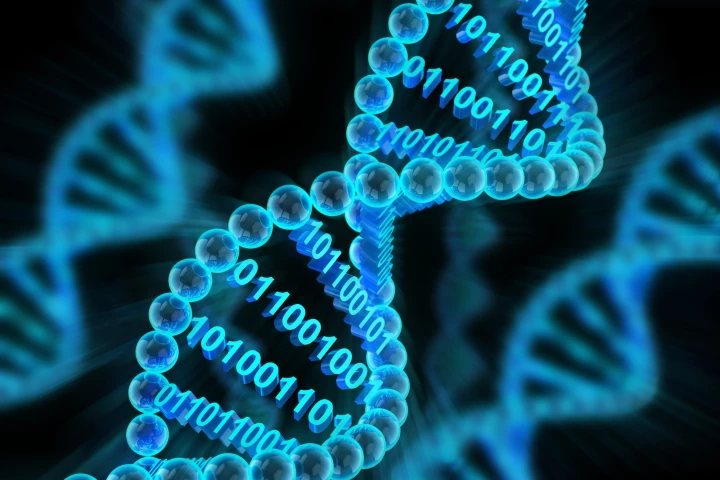 DNA is a promising data storage medium, but it’s difficult to retrieve and manipulate data written to it. Now a team has developed “chemical neurons” that can conduct calculations on data stored in DNA and read back the answers easily.
 -
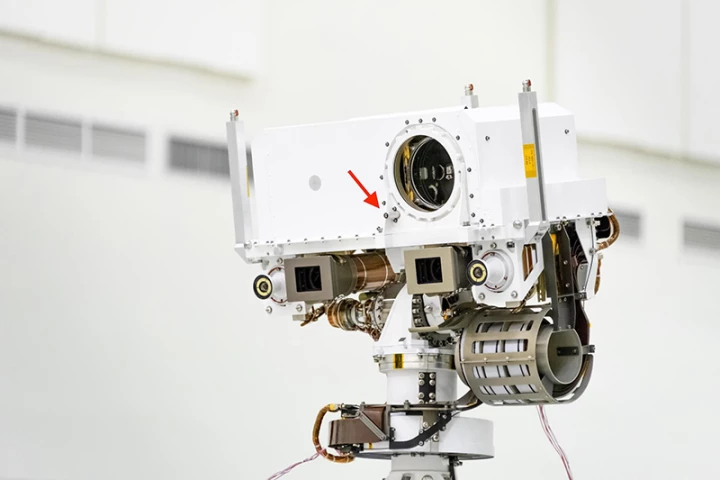 Painstaking analysis of audio collected last year by a French-built microphone aboard NASA's Perseverance robotic rover has revealed surprising new insights into the characteristics of the Martian atmosphere.
 -
 Antimatter is thought to have been mostly banished from our universe. But could it still be lurking out there? Astronomers have now identified signals from possible antimatter stars, and calculated how many of them might be hiding in our own galaxy.
 -
 On a scale that’s hard to fathom, the universe is structured like a “cosmic web." Astronomers have now directly observed light from filaments in this web, by staring at a patch of sky with a deep-field telescope to detect faint dwarf galaxies.
 -
 The whale shark and the manta ray are perhaps two of the ocean's most fascinating large fishes. Well, scientists have now announced the discovery of a prehistoric ancestor of both, that looked like a cross between the two.
 -
 Researchers at the Paris Observatory's Institute of Celestial Mechanics and Ephemeris Calculation have found that the unusual tilt of Saturn's axis is due to the periodic gravitational pull of its moons over the last billion years.
 -
 If you saw a finch once, chances are you'd have great difficulty picking it out from a group of finches later on. A new AI-based system can do just that, though, potentially making life much easier for both biologists and the birds that they study.
 -
 Researchers at CNRS in France and UNESP in Brazil have traced back the odd orbits of objects called Centaurs and found that 19 of them must have originated around another star, before being captured by the Sun’s gravity.
 -
 If someone is suffering from a chronic wound, it's important for their doctor to continuously know the status of that injury. A new bandage is designed to keep physicians in the loop, via everyone's favorite wonder material – graphene.
Load More