
Cloud
-
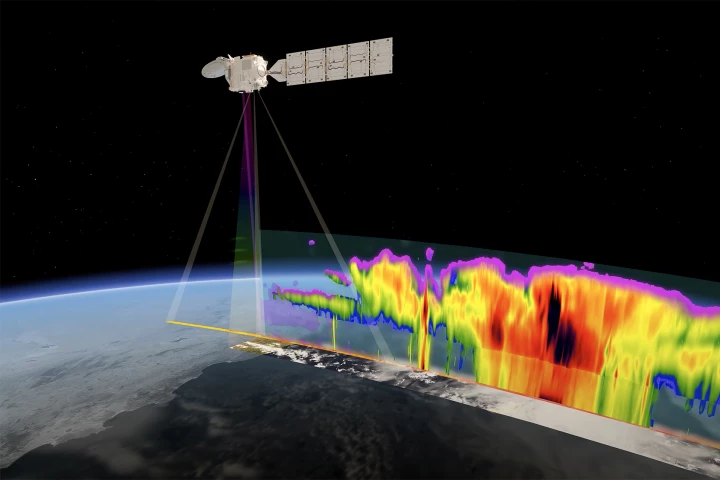 Clouds. They’re not very well understood. EarthCARE, a soon-to-launch satellite, will use advanced tech to unlock their mysteries, giving scientists a better understanding of the mysterious weather phenomenon so they can produce more accurate climate forecasts.
 -
 The James Webb Space Telescope has made the first direct analysis of clouds on a nearby alien world. These aren’t just made of water vapor but also sand, which would move around the planet much like Earth’s water cycle.
 -
 Collectors of trading cards are always hunting for rare shiny variants – and now astronomers have found the exoplanet equivalent. The shiniest planet ever found, LTT9779 b, is an ultra-hot, cosmic disco ball thanks to clouds made of glass and titanium.
 -
 While antibiotic-resistant bacteria are on the rise, you might have thought that the potentially deadly bugs would be found mostly where people and other animals congregate. But researchers have now found them in a most remarkable place.
 -
 Home to constant turbulent weather and the Great Red Spot – a storm bigger than Earth – Jupiter is the storm capital of the solar system. Now NASA’s Juno mission has discovered two new quirks of these storms – shallow lightning and “mushball” hail.
 -
 Using polarized light, astronomers have detected signs of cloud bands in the atmosphere of a brown dwarf far beyond the solar system. It turns out that these gassy giants have a similar appearance to Jupiter, and the same kind of wild weather.
 -
 In a world first, researchers have conducted a cloud-brightening trial as a way of protecting fragile corals in Australia's Great Barrier Reef, to see whether reflecting some of the Sun’s energy away could help limit damage due to climate change.
 -
 Aircraft have been known to mess with the clouds as they pass through or over them. A new study has found that planes could be boosting rainfall and snowfall by up to 10 times, and examined the microphysics behind it.
 -
 The unusually cold year of 1816 has been linked to one of the most powerful volcanic eruptions in recorded history, and now we may know how. A new paper explains how electrified ash from the eruption could have “short-circuited” the Earth’s ionosphere and triggered the “Year Without A Summer.”
 -
 With the once controversial idea of battling climate change through geoenginnering slowly gaining popularity, new research from the University of Exeter offers evidence that this untested approach could result in climate chaos.