
Clock
-
 For all our telescopes and colliders, dark matter has remained an elusive ghost for the better part of a century. Now, a team has turned to a nuclear clock with the hope of revealing the faint fingerprints of this hidden matter.
 -
 If, like me, you can't go a day without making sure your watch is synced to the second, you'll be delighted to learn that a new atomic clock has broken the record with an accuracy of 5.5 x 10⁻¹⁹ – gaining or losing one second in 57.6 billion years.
 -
 Atomic clocks are our most accurate timekeepers, losing only seconds across billions of years. But nuclear clocks could steal their thunder, speeding up GPS and the internet. Now, scientists have built and tested the first prototype nuclear clock.
 -
 Scientists have developed the most accurate atomic clock – if you ran it for twice the current age of the universe, it would only be off by one second. This could not only improve services like GPS, but help scientists probe how gravity affects time.
 -
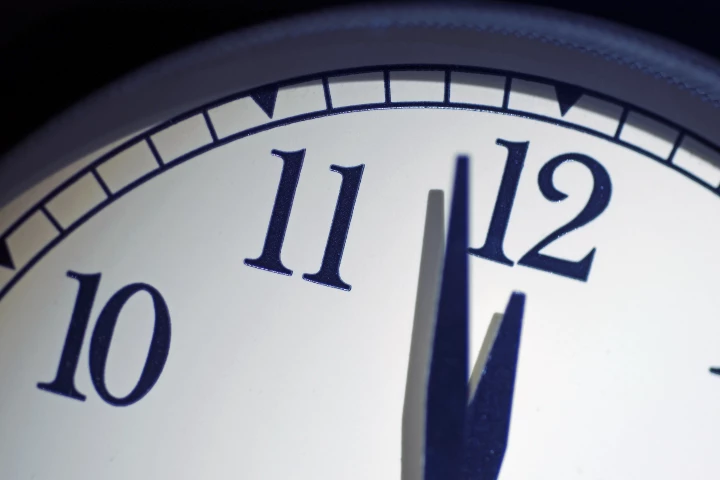 Despite a 2024 so far marked with serious conflicts that threaten to escalate further, climate uncertainty and the rapid ascension of AI technologies, the famous Doomsday Clock has remained paused at 90 seconds to midnight, the same time as last year.
 -
 University of Oxford physicists have linked two atomic clocks through quantum entanglement for the first time. The feat can help make these clocks so precise that they begin to approach the fundamental limit of precision set by quantum mechanics.
 -
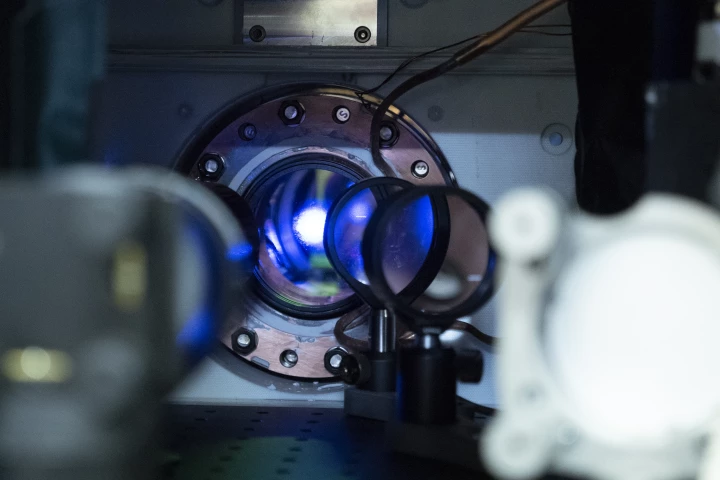 The flow of time isn’t as consistent as we might think – gravity slows it down, so clocks on Earth tick slower than those in space. Now researchers have measured time passing at different speeds across just one millimeter, the smallest distance yet.
 -
 Atomic clocks are our most precise timekeepers, with the best ones keeping time to within one second in 15 billion years. But there’s always room for improvement, as researchers at MIT have now demonstrated with a new quantum-entangled atomic clock.
 -
 In recent tests run by the National Institute of Standards and Technology (NIST), experimental atomic clocks have achieved record performance in three metrics, meaning these clocks could help measure the Earth’s gravity more precisely or detect elusive dark matter.
 -
 At the heart of an atomic clock are, as the name suggests, atoms of a specific type. Now, physicists at the National University of Singapore (NUS) have found that lutetium atoms could make for more stable atomic clocks.
 -
 Scientists have set a new world record for atomic clock stability using a pair of ytterbium-based timepieces stable down to quintillionths of a second. The researchers believe that their new system may prove invaluable in determining the precision of fundamental universal constants.
 -
 An optical clock built by a team led by Matthias Lezius of Menlo Systems not only has the potential to one day produce centimeter-level GPS location fixing, but is capable of operating in a zero-gravity environment.
Load More