
Climate Solutions: Cement
Direct emissions from cement production were responsible for around 3% of total greenhouse gas emissions in 2016. These emissions are set to rise dramatically, with projected demand for cement ramping up rapidly in the coming decades.
Carbon dioxide is produced as a byproduct of a chemical conversion process used in the production of clinker, a component of cement. In this reaction, limestone (CaCO3) is converted to lime (CaO), and produces CO2 as a byproduct. Cement production also produces emissions from energy inputs – but these related emissions are included in ‘Energy Use in Industry’ rather than here.
Solutions in this area tackle the problem from many angles. Some initiatives aim to make concrete without cement. Others attempt to inject CO2 back into the concrete, capturing and storing it. Others aim to improve concrete's performance as a carbon sink, absorbing atmospheric carbon for many years after it's laid. This enormous problem will require many technical solutions – particularly ones that don't raise construction prices in developing countries.
-
 A new type of carbon-neutral concrete has been commercially used for the first time, in a skyscraper being built in Manhattan. The binder utilized in the concrete is made of granite instead of traditional greenhouse-gas-emitting limestone cement.
 -
 A six-year competition to capture CO2 emissions from operational power plants and convert them into useful products has drawn to a close, and produced dual winners with technologies that promise to reduce the environmental footprint of concrete.
 -
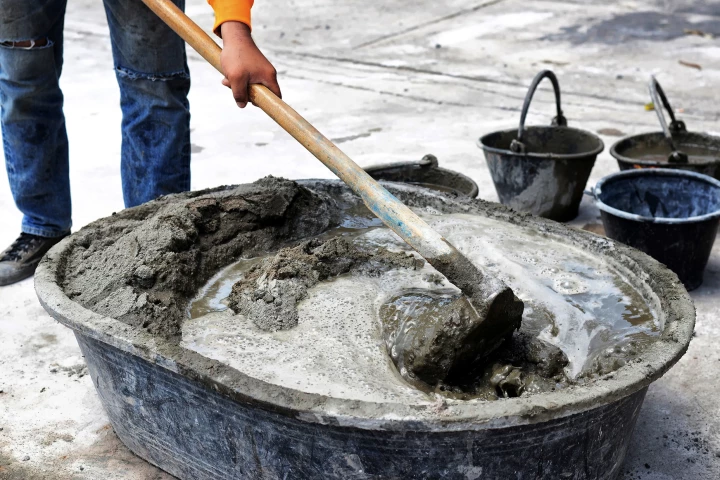 As one of our most relied upon construction materials, concrete makes a significant contribution to our overall carbon emissions. By altering the quantities of materials used in this process, scientists have uncovered a method of cement mixing that could reduce these emissions by more than half.