
Chile
-
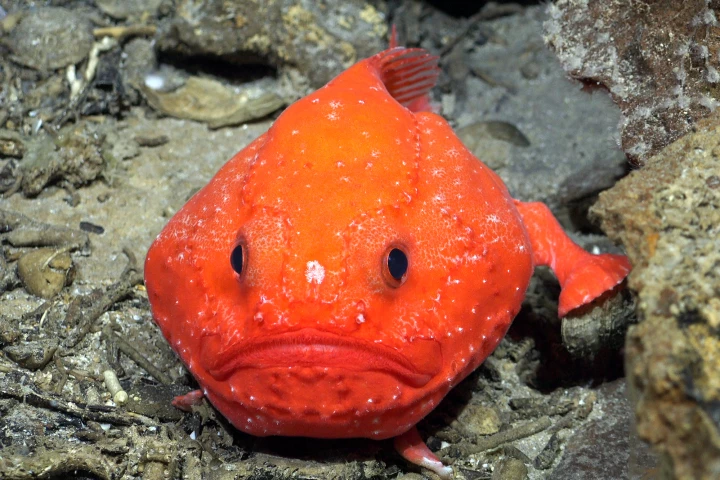 An underwater expedition off the coast of Chile has discovered 160 species not known to live in the region, at least 50 of which are new to science. The information will inform marine protection strategies for important regions in international waters.
 -
 Meet the Gonkoken nanoi, a large duck-billed dino that roamed very far and wide 72 millions years ago. Discovered in southern Chile, it has now raised even more questions as to how ancient hadrosaurs moved across the planet during the Mesozoic Era.
 -
 Astronomers have taken the sharpest images ever of the most massive star in the known universe. With these new images the scientists refined just how big the star is, and in the process revised our ideas of how big stars could possibly ever get.
 -
 A strange fossil discovered in Antarctica almost a decade ago has finally been identified. Researchers at the University of Texas at Austin have determined that the object is a giant, soft-shell egg, most likely laid by an ancient marine reptile.
 -
 Studying the effects of once-in-a-century rainfall in the hyperarid core of the Atacama Desert in Chile, a team of astrobiologists found that instead of causing a bloom of growth, the unexpected abundance of water killed off three quarters to seven/eighths of the microbe species present.
 -
 A pledge made last year to forge millions of acres of new national parks for Chilean Patagonia has come to fruition, with President Michelle Bachelet today formalizing the handover of the largest private land donation in history.
 -
 Construction has finally begun on the European Extremely Large Telescope (E-ELT), with the first stone laid in a ceremony last week. Being built by the ESO on the 3,046 m (9,993 ft) high summit of Cerro Armazones in Chile, the E-ELT is set to be the world’s largest optical and infrared telescope.
 -
 An adventurous spirit landed German-born Alexander Wopper in the southern Chilean city of Valdivia 30 years ago, and it's that same spirit that emboldened him to breathe new life into the underused river that cuts right through its center.
 -
 The US Department of Energy's SLAC National Accelerator Laboratory has given the green light to start construction of the world's largest digital camera. With a resolution of 3.2-gigapixels, the new camera is at the LSST now under construction atop Cerro Pachón in Chile.
 -
 The people of Chile's drought-stricken north, home to the Atacama desert, have had to make do with very little when it comes to water. But a mist known as the Camanchaca rolls in from the Pacific from which they are able to harvest water through cleverly designed nets.
 -
 NASA scientist's say that they have estimated that Mars may once have had enough water to form a vast body the size of the Arctic Ocean surrounding its north pole, where only plains remain.
 -
 This week, ESA will carry out tests of a prototype Mars rover in the Atacama desert related to navigation, remote control and the use of scientific instruments to develop technologies and gain practical experience in anticipation of the launch of ESA's ExoMars mission in 2018.
Load More