
Ceramics
-
 While topically-applied medications do help alleviate various skin conditions, they'd be even more effective if they could better penetrate the skin's surface. Newly developed nanoceramic "stars" may one day help, by poking tiny holes in the skin.
 -
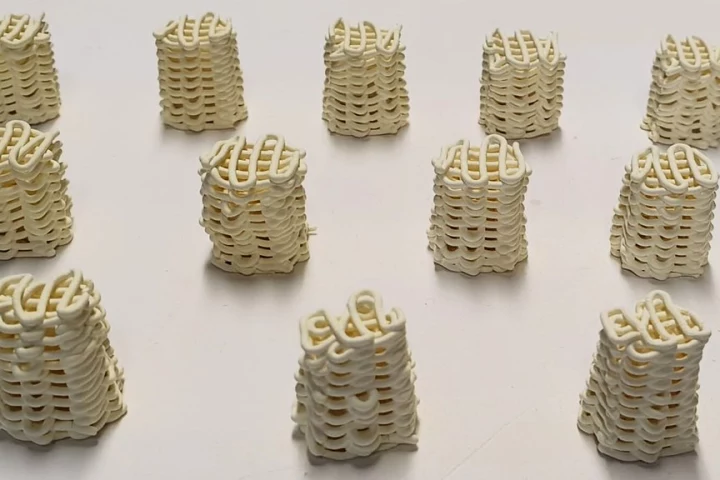 Scientists have developed a new method for removing toxic “forever chemicals” from wastewater. 3D-printed ceramic lattices can remove up to 75% of PFAS from polluted water in three hours – and the structures get better at their job as they’re reused.
 -
 Archaeologists have discovered one of the oldest examples of alcohol consumption. Ancient pots dating back 9,000 years have been found to contain traces of an early form of beer, which seems to have been used as part of a ritual honoring the dead.
 -
 While it's not uncommon for older people to get total hip replacements, doctors now often go with hip resurfacing implants for younger patients. The devices can cause problems, however. A new implant may change that, as it's made out of ceramic instead of the traditional metal.
 -
 Archaeologists have unearthed some of the earliest evidence of winemaking, dating back about 8,000 years. Excavations in the Republic of Georgia dug up shards of pottery from the Early Ceramic Neolithic period around 6000 BCE, which were found to contain the telltale chemical compounds of wine.
 -
 Ultrasound is already utilized to treat brain disorders such as Alzheimer’s and Parkinson’s diseases. Unfortunately, however, the density of the skull absorbs or reflects much of the ultrasound. A solution may be on the way, in the form of what's being called a "window to the brain."
 -
 A team of researchers from MIT and Lawrence Livermore National Laboratory (LLNL) have developed new ultra-lightweight materials that are as light as aerogel, but 10,000 times stiffer, and may one day revolutionize aerospace and automotive designs.
 -
 An international team of researchers has discovered a potential new use for discarded toilets, along with other ceramic waste such as basins, stoneware and bricks. It turns out that they can be made into a more eco-friendly form of cement.
 -
 According to the US Department of Agriculture, every year approximately 455,000 tons (412,769 tonnes) of discarded eggshells must be transported and disposed of in the US alone. Now, however, scientists have developed a method of using such eggshell waste in the production of ceramic goods.
 -
 University of West England researchers are using Egyptian faience to develop a printable ceramic that is self-glazing.
 -
 Fraunhofer researchers have created a super high-wearing diamond coated ceramics composite material that combines the best of both materials.