
Carbon
-
 A 3,775-year-old log discovery has lent credence to the idea of burying wood to sequester the carbon it contains. Known as a wood vault, the concept helps keep CO2 out of the atmosphere while allowing the soil to be used for crops and other purposes.
 -
 Despite evidence that indicates we're now living beneath unprecedented levels of atmospheric greenhouse gases, a lack of historical records has meant we've had little to compare it to. So scientists decided to consult the planet's own record books.
 -
 Researchers have developed a new, lightweight foam made from carbon nanotubes that, when used as a helmet liner, absorbed the kinetic energy caused by an impact almost 30 times better than liners currently used in US military helmets.
 -
 Our Sun is capable of terrifying outbursts – and now scientists have discovered evidence of its biggest tantrum on record. Tree rings dating back 14,000 years contain a radiocarbon spike twice as powerful as the previous biggest known solar storm.
 -
 The best places to search for life beyond Earth aren’t planets like Mars – they’re icy moons like Europa. The case for life on this watery world just got stronger, as the James Webb Space Telescope has detected a fresh carbon source there.
 -
 Although HEPA filters and UV lights are effective at neutralizing bacteria in hospitals, homes and other settings, they do have their drawbacks. A new light-activated material known as LumaFlo, however, is claimed to have them both beat.
 -
 Much of the heat and carbon produced by humans is absorbed by the ocean. New research has shed light on the role that underwater waves play in moving that heat and carbon around our oceans, an important factor in predicting climate change.
 -
 The amount of single-use plastics the world disposed of during the pandemic continues to be a huge environmental headache. A clever new upcycling method, though, takes the trash and turns it into one increasingly lucrative piece of tech, carbon dots.
 -
 Life on Earth has persisted for billions of years through many extreme climate events. MIT scientists have analyzed 66 million years of climate data and found a stabilizing mechanism for global temperatures that plays out on large timescales.
 -
 Tree rings can preserve a snapshot of the Earth throughout the tree's life. Now Australian scientists analyzing these records have found evidence of huge radiation storms that periodically bathe the planet – and their origin remains a mystery.
 -
 We're seeing a growing emphasis on direct air capture technology in our efforts to combat climate change, and an interesting new take on this technology could see it put to use on railways around the world.
 -
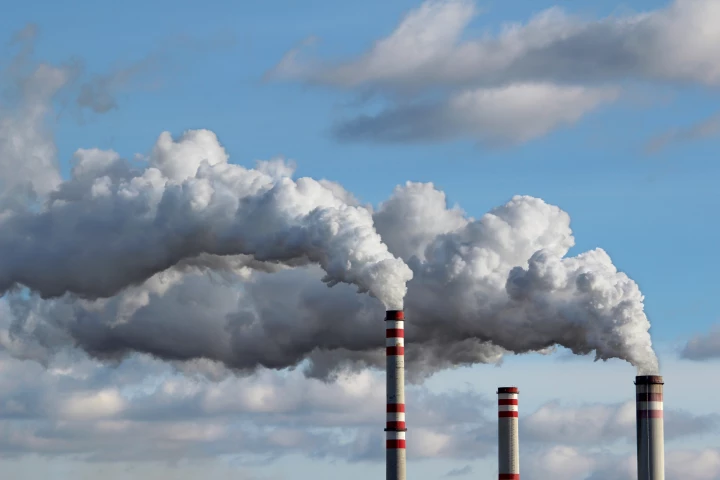 Carbon capture could be an important tool to fight climate change. Researchers have now developed a new compound that can reportedly remove carbon dioxide from ambient air with 99 percent efficiency and at least twice as fast as existing systems.
Load More