
Cameras
-
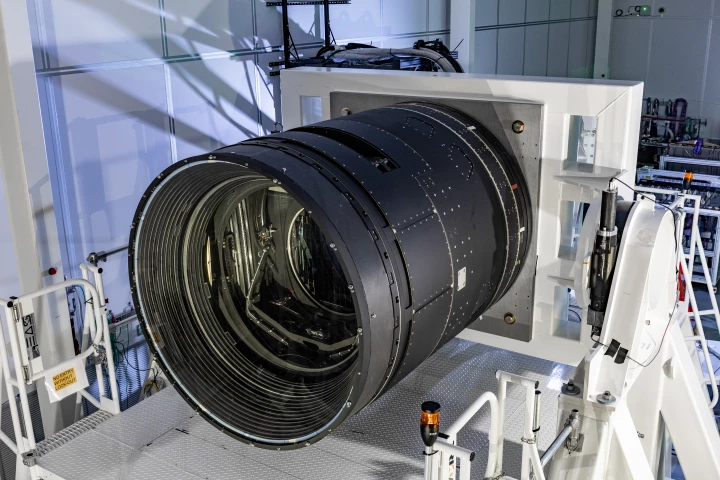 After decades of planning and building, the world's largest digital camera at the heart of the Vera C. Rubin Observatory on the summit of Cerro Pachón in Chile has snapped its first imagery – from test observations spanning a 10-hour window.
 -
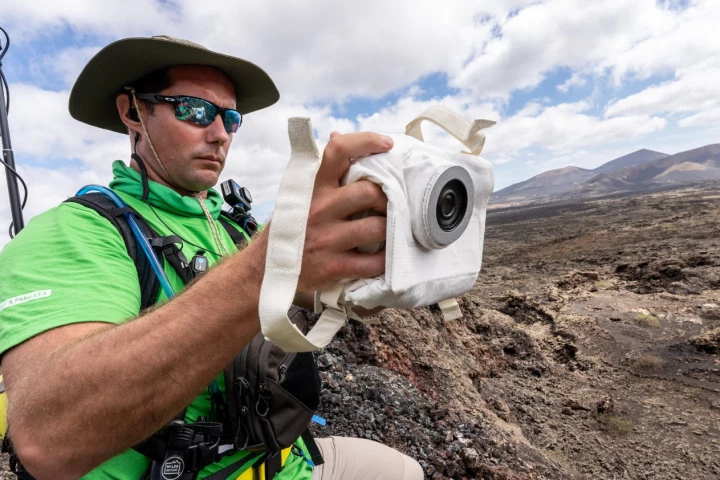 In anticipation of a photographic bonanza, NASA and ESA are testing the new Handheld Universal Lunar Camera (HULC), which will be carried by future astronauts to record their adventures in images and video when they return to the Moon in a few years.
 -
 Generally speaking, if you want to grab sharp images of fast movements such as molecular interactions, you're going to need a super-expensive rig. Researchers have developed a system built using projector tech that could significantly cut the cost.
 -
 Scientists at Duke University have developed an incredibly powerful new camera that combines dozens of lenses to capture images and video at resolutions of thousands of megapixels, in three dimensions.
 -
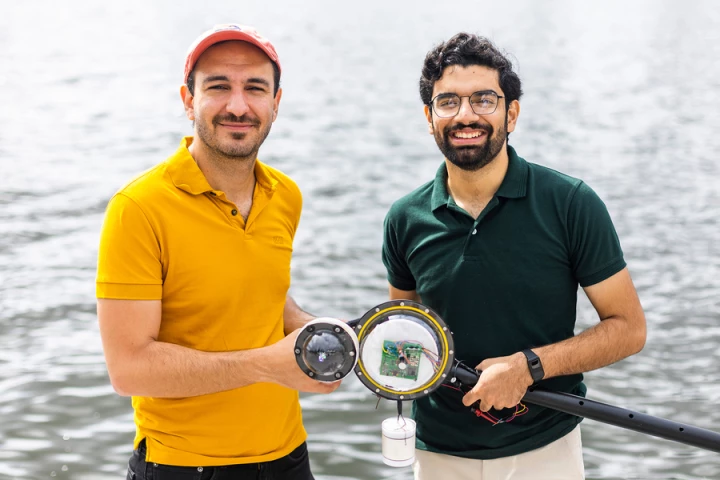 While seabed-located cameras are great for tasks such as monitoring wildlife, powering them can be challenging. That's where a new MIT-designed camera comes in, as it requires no battery, plus it wirelessly transmits its photos through the water.
 -
 While 360-degree security cameras are great for imaging a wide area, they're not so great when you want to zoom in on something that looks suspicious. A new setup addresses that problem, by combining three cameras in one system.
 -
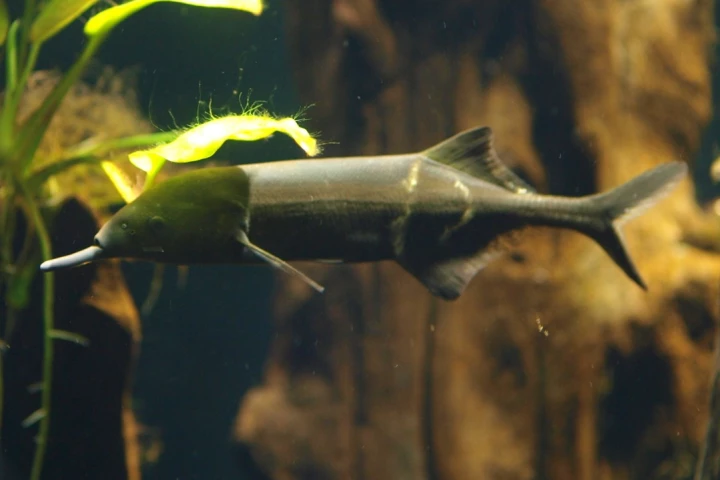 Back in 2016, a scientist from Germany's University of Bonn discovered how the African elephantnose fish can switch between its visual and electrical sensory systems. Now, a team led by that same researcher has developed a camera which mimics the fish's electrical sense of "sight."
 -
 Xenos peckii is a parasitic insect that spends much of its life cycle within the body of a wasp, but it's also known for its unusual eye structure. By copying that structure, scientists have created an ultra-slim camera that could allow for the manufacturing of thinner-than-ever smartphones.
 -
 People have been fascinated by dolphins for millennia, but we still know very little about their life in the wild. Now a team of scientists has developed cameras that harmlessly attach to the animal and provide a unique account of dolphin behavior beneath the waves.
 -
 Although smartphones may be getting thinner all the time, their cameras still present a bit of a problem. Scientists at Germany's Fraunhofer Institute, however, have developed a flat camera that's just 2 mm thick … and it has 135 tiny lenses instead of one "big" one.
 -
 Researchers at the Florida Institute of Technology have captured some stunning images of lightning at 7,000 frames per second while testing a new high-speed camera.
 -
 There are already a number of sunlight exposure-tracking devices out there, that let us know when it's time to apply more sunscreen. That's all very well and good, but how do we know if we've put enough on in the first place? Well, that's why the Sunscreenr was developed.
Load More