
Brain-computer interface
-
 Columbia and Stanford researchers have debuted a new paper-thin brain-computer interface, the Biological Interface System to Cortex (BISC). The device offers hope to patients enduring seizures, strokes, spinal cord injuries, ALS, and blindness.
 -
 Scientists at Northwestern University have developed a sub-scalp device that beams light through bone into the brain, teasing a future of drug-free pain relief, cybernetic control of robotic limbs, and the simulation of sight, hearing, and touch.
 -
 US brain-computer-interface startup Paradromics is establishing itself as a major player in the neural-device space, with the Food and Drug Administration green-lighting a human trial to test its ability in restoring speech to people with paralysis.
 -
 In another advancement in the field of brain-computer interfaces, a new implant-based system has enabled a paralyzed person to not only talk, but also 'sing' simple melodies through a computer – with practically no delay.
 -
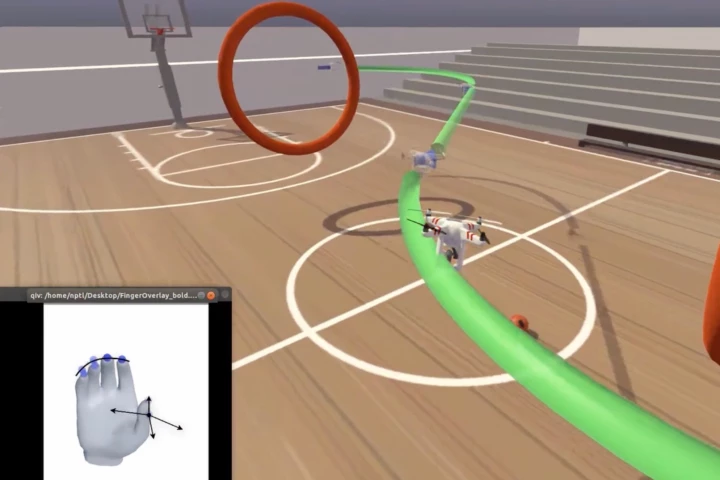 Brain-computer interfaces may allow paralyzed people to perform basic tasks, but there's more to life than eating and typing. That's where a new BCI comes in, as it has allowed a man to fly a virtual drone just by thinking of moving his fingers.
 -
 A new study from Caltech calculates that our brains process information at the extremely slow speed of just 10 bits per second. This leisurely pace may have long evolutionary roots, despite our sensory systems gathering data 100 million times faster.
 -
 Researchers have created a thin transparent neural implant that can monitor activity on the brain's surface but also account for functions at a deeper level. The hope is that it will lead to an accurate but less invasive brain-computer interface.
 -
 There may be new hope for stroke victims and other "locked-in" people who are unable to communicate by conventional means. It comes in the form of the experimental new BrainGPT system, which is able to read users' thoughts and convert them into readable text.
 -
 Researchers have developed an implant that records brain signals to decode what people are trying to say. While still early days, the device may provide people who’ve lost speech due to neurodegenerative disease with the ability to communicate.
 -
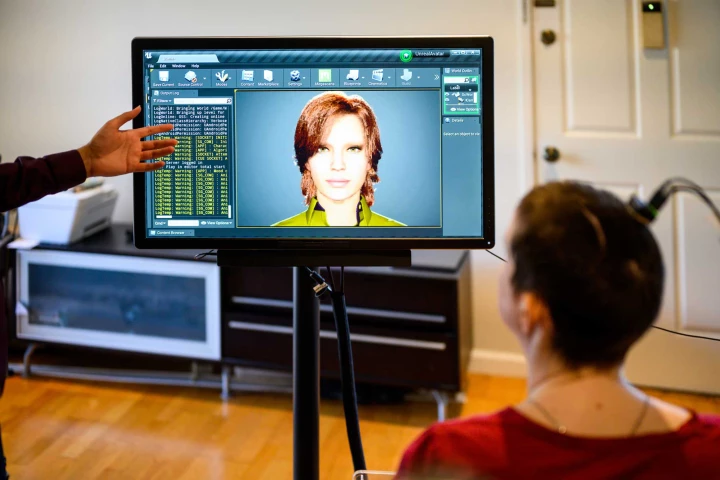 Two separate, recently published studies have demonstrated how combining brain sensors and AI to create a brain-computer interface (BCI) gave two women with the inability to speak a voice. It's hoped the tech will soon be able to assist more people.
 -
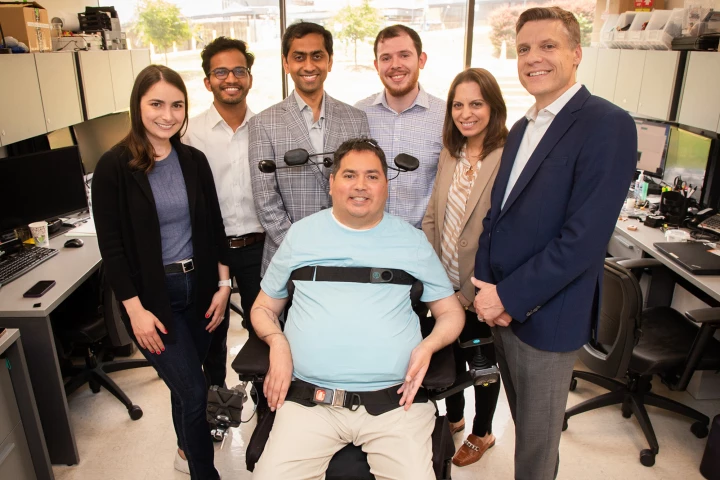 A team of researchers, engineers and surgeons have used a novel ‘double neural bypass’ technology to restore arm movement and sensation to a quadriplegic man. It’s hoped the technology will help others affected by impaired movement or paralysis.
 -
 Serving multiple useful purposes, brain-computer interfaces (BCIs) usually incorporate scalp-applied or even brain-implanted electrodes. A new less-invasive BCI, however, can simply be stuck in the patient's ear canal as needed.
Load More