
Bionics
-
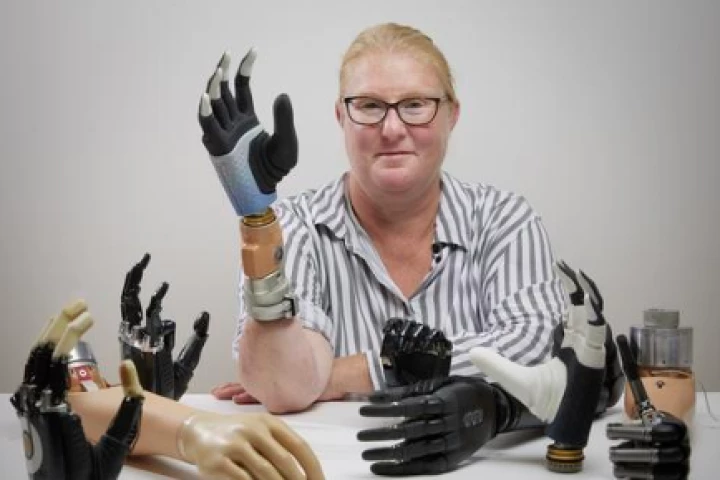 The world is edging closer to fully functional prosthetic limbs, with the success of the bionic Mia Hand. This futuristic piece of biotech connects to the nervous and skeletal systems to offer 80% of normal, daily use to someone who has lost a hand.
 -
 Although there have already been birds that received strap-on artificial legs, scientists are now reporting the first successful integration of a prosthetic foot directly into a stork's residual leg bone. They're describing the animal as the world's first "bionic bird."
 -
 Scientists at Linköping University have developed an artificial muscle that runs off of glucose and oxygen like its organic counterpart. Made of a special polymer, the new plastic muscles open the promise of implantable artificial muscles that can be powered by like living organs.
 -
 What do you do if you're a Japanese car maker facing an aging population that needs more help getting back on their feet than behind the wheel? If you're Toyota, you turn this problem into an opportunity and develop a robotic system to help them regain the use of their legs.
 -
 The strength of spinach isn't only in its nutrients, but also in its ability to be hacked to function as a sensor able to detect things like explosives, according to researchers at the Massachusetts Institute of Technology.
 -
 Dennis Aabo Sørensen may be missing a hand, but he nonetheless recently felt rough and smooth textures using a fingertip on that arm. The fingertip was electronic, and was surgically hard-wired to nerves in his upper arm.
 -
 Scientists have created an implantable brain-machine interface that may soon allow people with spinal cord injuries the ability to walk again using the power of their own thoughts.
 -
 Researchers at the University of Washington have developed visual simulations that indicate what the world might look like to people with retinal implants. The resulting images are, in a word, blurry.
 -
 Biomedical engineering company Össur has announced the successful development of a thought controlled bionic prosthetic leg. The new technology enables subconscious, real-time control and faster, more natural responses and movements.
 -
 As different human enhancement technologies advance at different rates, they bleed into society gradually and without fanfare. What's more, they will increasingly necessitate discussion about areas that are often overlooked – what are the logistics and ethics of being superhuman?
 -
 Practical exoskeletons have moved closer to common usage with the news that Honda has begun leasing 100 of its Walking Assist Devices to hospitals in Japan so that it can monitor and validate their usefulness of the device in the real world.