
Biomass
-
 Farmers around the world regularly burn post-harvest crop waste, producing a significant amount of greenhouse gases and air pollution in the process. A new portable system, however, can be brought to farms to convert that waste into useful products.
 -
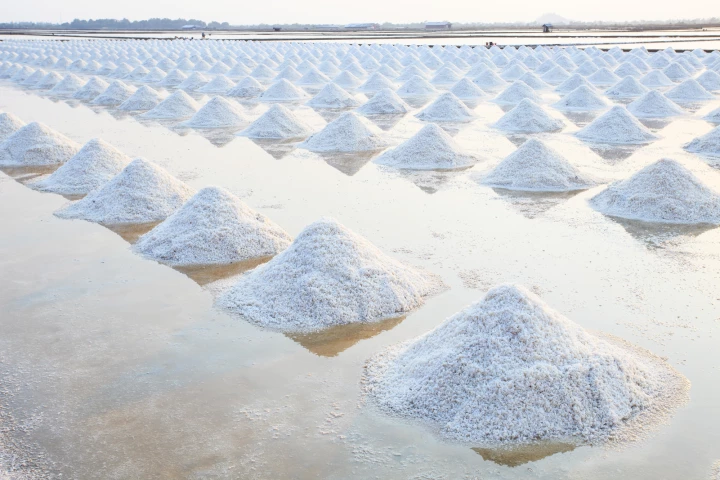 Could salt, one of the oldest preservatives around, help keep carbon deep underground for thousands of years? Researchers believe it can, and that it might offer a way forward in containing a gas that's a major contributor to climate change.
 -
 Scientists are claiming a chemical breakthrough that replaces the key molecule in conventional tires with one sourced from grass and trees instead, all without affecting the tire's color, shape or performance.
 -
 Global efforts to extract energy from sewage in forms such as heat, biogas and even electricity may get a boost thanks to the work of a team of biochemists and microbiologists from Ghent University, Belgium, who are collaborating on a pilot project with DC Water in Washington DC.
 -
 Researchers are experimenting with producing electricity from tomato waste. With a microbial electrochemical process, the organic material releases electrons into a fuel cell to become electricity.
 -
 Algae is proving to be pretty darn useful – in recent years, it’s been used to produce oxygen, purify wastewater, provide light and serve as a source of biofuel. Now, bioplastics firm Algix and clean tech company Effekt are making flexible foam out of the stuff, too.
 -
 Researchers at the KU Leuven Centre for Surface Chemistry and Catalysis in Belgium have developed a Polylactic acid (PLA) production technique that is cheaper and greener and makes the bioplastic a more attractive alternative to petroleum-based plastics.
 -
 Trees may be a renewable resource, but the rate of this renewal may not meet the increasing demand for plant biomass. But now researchers at the University of Manchester have potentially found a way to boost tree stocks by using gene manipulation to increase the size and growth rate of trees.
 -
 Researchers at Virginia Tech claim to have created a method to produce hydrogen fuel using a biological technique that is not only cheaper and faster than other methods, but also produces hydrogen of a much higher quality ... and all from the leftover stalks, cobs, and husks of corn.
 -
 Researchers at the Fraunhofer Institute have developed a "biobattery" in the form of a highly efficient biogas plant that can turn raw materials like straw, scrap wood and sludge into useful outputs for the energy and transportation industry.
 -
 Indiana University biologists claim to have found a quicker, cheaper, cleaner way to increase production in bioethanol-producing microbes using nitrogen gas. This could replace chemical fertilizers and make the cost of cellulose ethanol competitive with that of corn ethanol and gasoline.
 -
 Researchers have been able to take the cellulose in sawdust and convert it into hydrocarbon chains. These can be used as an additive in gasoline or as building blocks to create plastics, rubber, nylon, insulation foams and other materials normally made from ethylene, propylene and benzene.
Load More