
Biofuel
-
 A new video takes you inside Dyson's impressive vertical farming operation, which is home to 1,225,000 strawberry plants and shows you how the company is applying its manufacturing knowledge to producing homegrown food for British consumers.
 -
 Thanks to a recent discovery regarding marine algae, scientists have developed crop plants that absorb a fuller spectrum of sunlight, resulting in better growth. The finding could also lead to increased production of biofuels.
 -
 Scientists have developed a synthetic pathway that can capture CO2 from the air more efficiently than in nature, and shown how to implement it into living bacteria. The technique could help make biofuels and other products in a sustainable way.
 -
 Microalgae are widely used in products such as biofuels, nutritional supplements and cosmetics. A newly-described type has been found in a home aquarium – and it could prove to be particularly useful.
 -
 Although they have a number of potential uses, spent coffee grounds typically just end up in landfills – or at best, in compost heaps. According to a new study, however, they could soon be utilized to both support and feed biodiesel-producing algae.
 -
 While plants such as soybeans are major sources of biofuel, they're grown on land that could otherwise be used for food crops. With that problem in mind, scientists have genetically engineered oil-producing duckweed that could be grown in wastewater.
 -
 A team at the Georgia Institute of Technology have come up with a concept that would see bacteria shipped to Mars produce rocket fuel and liquid oxygen from atmospheric CO2 to power a spacecraft on its return journey to Earth.
 -
 Even with today's various sewage-treatment technologies, a great deal of municipal wastewater is still released back into waterways either partially or completely untreated. According to a new study, however, plots of willow trees could be used to clean it up – while also producing useful materials.
 -
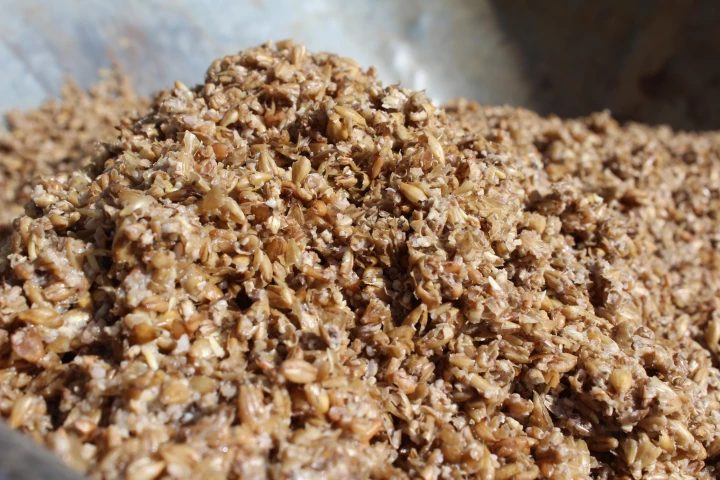 The brewing of beer produces great quantities of leftover grain, which often ends up being processed into cattle feed. Scientists have developed a new method of extracting the protein and fiber from that waste, however, for use by humans.
 -
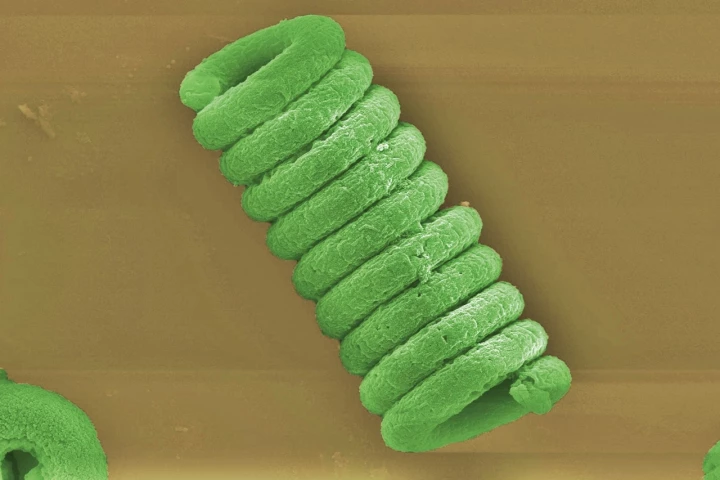 Many people take Spirulina as a dietary supplement, but researchers at the Swiss Federal Laboratories for Material Science have found a way to put the tiny spirals to work removing contaminants from water, and then make biofuels from their remains.
 -
 Corals serve as a host to algae, which produces sugars that the corals consume. Now, scientists have 3D-printed coral that's even more algae-friendly than its natural equivalent – it could help limit coral bleaching, and provide a source of biofuel.
 -
 When olive oil is produced, the leftover water and solid residue are discarded – and that can be problematic. Help may be on the way, however, as scientists have devised a process of converting the wastewater into biofuel, fertilizer and clean water.
Load More