
Ammonia
The second-most produced chemical in the world, ammonia is used in huge volumes in agriculture, among other industries. Current production techniques are dirty and energy-intensive, but green ammonia has considerable potential as a clean fuel, storing more than 20 times as much energy by weight as today's lithium batteries.
R&D work is advancing quickly on new green ammonia production methods, ammonia engines for heavy marine, aviation, trucks, trains and mining equipment, and combustion-free ammonia fuel cells for converting it directly into electricity.
Featured Stories
-
 You'll be hearing a lot more about ammonia as a clean fuel option in the race to zero carbon by 2050. In particular, it looks like a strong option for long-haul ships and trucks. So what is it, how is it made, and how does it shape up as green fuel?
 -
 If all the major green ammonia projects on our shortlist are completed on schedule, their combined production total will be more than half of today's global ammonia industry by the mid-2030s – eliminating nearly 1% of global carbon dioxide emissions.
 -
 Scientists at Australia's Monash University claim to have made a critical breakthrough in green ammonia production that could displace the extremely dirty Haber-Bosch process, with the potential to eliminate nearly 2% of global greenhouse emissions.
-
 The fertilizer used on around half of the food we consume is now one of the biggest drivers of human-made greenhouse gas emissions, with China, India, the US, Brazil and Russia the biggest polluters, according to a new global nitrous oxide report.
 -
 Researchers have uncovered the mechanism by which our taste buds detect ammonium chloride, exemplified by the distinct taste of salty licorice. They say the discovery provides evidence for the existence of a sixth basic taste.
 -
 Science is quickly catching up to the powerful sniffers on dogs with its own range of artificial noses. Case in point: researchers modified E. coli bacteria to spin electrically conductive nanowires capable of detecting disease-related odor molecules.
 -
 Ammonia is commonly used in commercial crop fertilizers, which in turn can pollute waterways when they run off of fields. New research, however, suggests that engineered bacteria could one day take the place of such fertilizers.
 -
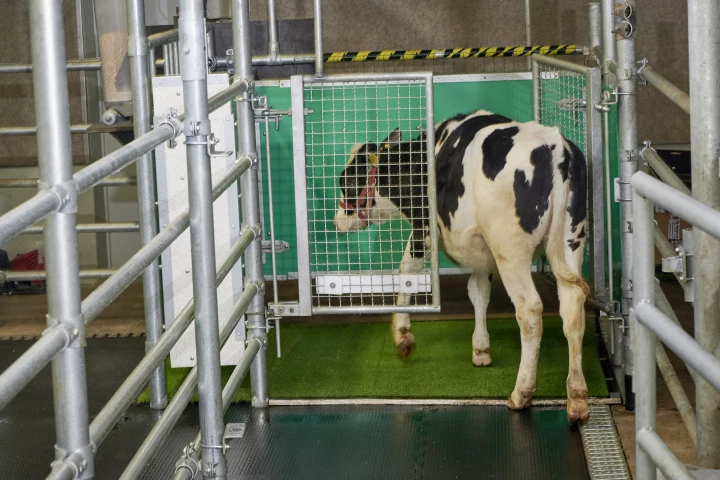 Agriculture is a huge environmental issue in many ways, but one that’s often overlooked is livestock urination. Researchers from Germany and New Zealand have now demonstrated a potential way to reduce that problem – by toilet-training cows.