
Alzheimer's disease
Alzheimer's disease
-
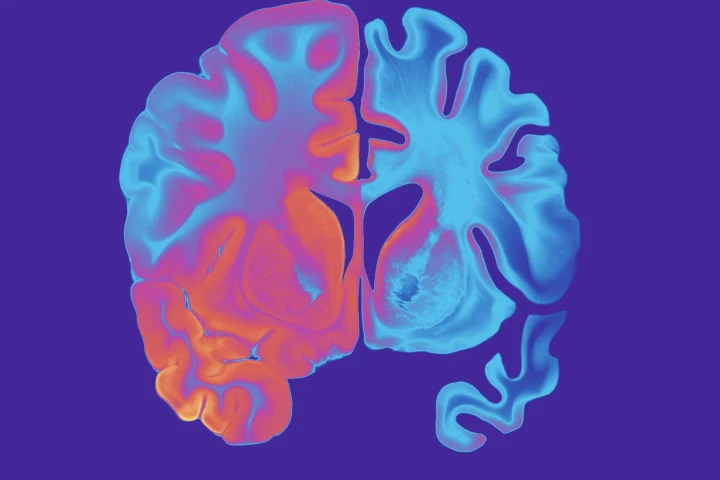 Some brains seem to defy Alzheimer's. This phenomenon, known as cognitive resilience, is one of the most intriguing puzzles in neuroscience today.
 -
 Becoming more forgetful and feeling slower in your thinking is normal in older age. But when these changes are more than you’d expect for your age it might be a sign of mild cognitive impairment. So does that mean you’ll soon develop dementia?
 -
 Elevated levels of GDF15 in the peripheral blood were associated with dementia risk in a recent study, with researchers arguing the chemical could serve as a handy biomarker for future cognitive decline.
 -
 A new study has uncovered evidence of “synaptic down-selection” as we sleep, suggesting our nightly shut-eye is a perfect opportunity to prune back any neurological hedges that went wild during the day.
 -
 A new study has found that the stride length of a dog’s front legs can be used to accurately diagnose their cognitive decline. Because a person’s change in gait can play a significant role in spotting early signs of Alzheimer's disease or dementia.
 -
 People taking fish-oil supplements in an effort to shield their brain from Alzheimer's disease might be better off investing that money in their diet, with a two-year study finding that omega-3 pills offer no protection from cognitive decline.
 -
 A report on an individual patient has prompted scientists to ask whether psilocybin, the psychedelic compound in magic mushrooms, could have unexpected effects on the ageing brain.
 -
 People with Alzheimer’s disease who took the over-the-counter supplement glucosamine were 25% more likely to die within five years than those who didn’t. This new study investigates its role in speeding up cognitive decline.
 -
 In the US, 6,000 women enter menopause every day, or 1.3 million in a year. Now, a study sheds light on the brain connectivity changes that happen in this phase, paving the way to finally understanding and ideally treating midlife cognitive decline.
 -
 One of the biggest mysteries in neuroscience is why women account for nearly two-thirds of Alzheimer’s cases. Now, we may be a step closer to understanding it, as an overlooked part of the brain appears to fail as estrogen abandons it.
 -
 New research suggests that blood biomarkers in combination with self-reported memory concerns could offer an early clue to how Alzheimer’s disease develops across the life course, meaning midlife could be a critical window for promoting brain health.
 -
 Many of us probably don't get a lot of time to put pen to paper these days, but a new study suggests we should be paying more attention to how we write – because changes in a couple of key areas could be early red flags of cognitive decline.
Load More