
Acoustics
-
 It turns out donated blood has a shelf life – and it can be very different for each donor. Recently, scientists have found a way to track how blood ages, helping hospitals manage their supply more effectively.
 -
 You may not think of fish as being noisy, but they can actually be a pretty vocal bunch. A new AI system is able to quickly identify specific fish calls within general reef noise, allowing scientists to better track local populations.
 -
 Guiding lasers where they need to go is a key part of optics systems, and now engineers at DESY have developed a way to bend laser beams without anything touching them. The light is deflected using an invisible grating made of air shaped by acoustics.
 -
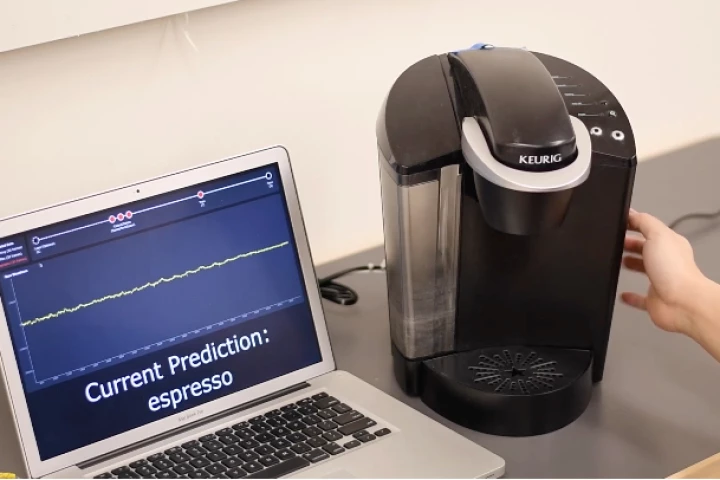 Using touchscreens or buttons to control devices isn't always practical, and voice commands may not work in loud environments. A new system offers an alternative, in that it utilizes acoustic waves which travel across the surface of existing objects.
 -
 Engineers have developed a new system that can move objects without physical contact. The technique involves ultrasound waves acting on specialized surfaces to push or pull objects in set directions, which could help in manufacturing and robotics.
 -
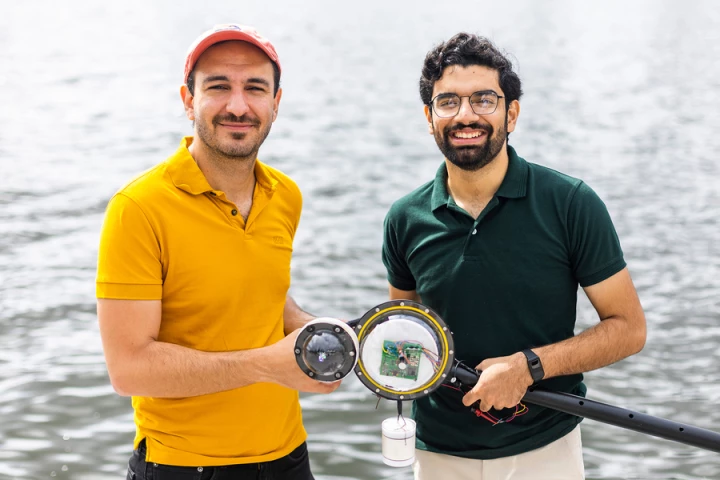 While seabed-located cameras are great for tasks such as monitoring wildlife, powering them can be challenging. That's where a new MIT-designed camera comes in, as it requires no battery, plus it wirelessly transmits its photos through the water.
 -
 Because both bats and moths are nocturnal, bats use echolocation to zero in on the insects when hunting them in the dark. A new study, however, suggests that some moths have evolved special wingtips to avoid becoming a meal.
 -
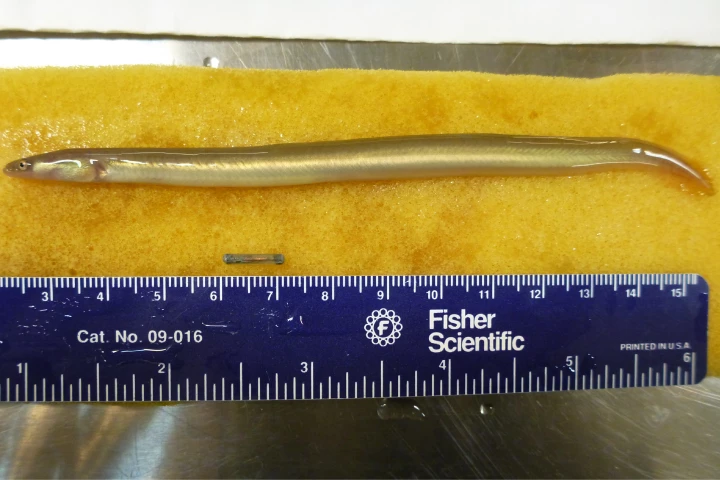 If you're going to check how fish are affected by hydroelectric dams, it's particularly important to monitor tiny, delicate individuals. That's why US scientists have developed what is claimed to be the world's smallest fish-tracking tag.
 -
 Fungus already shows promise as a "green" form of leather and protective packaging. Thanks to new research, it has now also found use in an environmentally-friendly sound-absorbing material.
 -
 MIT scientists have developed an acoustic system that acts like an underwater GPS, yet doesn't need batteries to operate. The system is instead powered by modulated audio signals reflected from the environment to provide net-zero energy positioning info.
 -
 The world's oceans are under threat not only from plastic trash, but also from "microplastics" – many of which take the form of fibers shed by synthetic fabrics as they're being washed. A new system uses sound to capture those fibers at their source.
 -
 Imagine if you were a spy who needed to receive secret messages while you walked around a crowded room, but you didn't want to wear an earpiece. Well, a cheap new device could help. It's billed as being "the first sound projector that can track a moving individual."
Load More