




Space is an exceptionally strange place, full of signals and observations that defy our understanding of the universe. In trying to explain these mysteries, sometimes astronomers hypothesize extremely exotic objects that we haven’t yet found. Here are some of the most fascinating oddities that may be lurking in the depths of the cosmos.
Noticing weird things then working backwards to figure out what’s causing said weird thing is a basic tenet of how science works. And when you’ve got a canvas as crazy as space, some of the proposed objects are pretty outlandish.
That’s why astronomers can look at the odd orbits of asteroids beyond Neptune and propose that there might be a huge ninth planet hiding at the outskirts of our solar system. Or notice that the expansion of the universe is accelerating, and hypothesize that blobs of dark energy could be pushing it apart.
From the sci-fi staple of wormholes to stars made of dark matter or antimatter, here are some of the most intriguing cosmic objects that could be out there somewhere, waiting for us to find them.
The strangest things in space
-
 Weird, hypothetical objects called "ploonets" may start life as a moon circling a giant planet, but models show they can be exiled and essentially turn into planets themselves. If true, this theory could explain away some astronomical mysteries.
 -
 Antimatter is thought to have been mostly banished from our universe. But could it still be lurking out there? Astronomers have now identified signals from possible antimatter stars, and calculated how many of them might be hiding in our own galaxy.
 -
 Exactly why and how the expansion of the universe is accelerating remains unknown. One hypothesis blames strange black-hole-like objects made of dark energy, and now astrophysicists have theorized how these objects work and where they all went.
 -
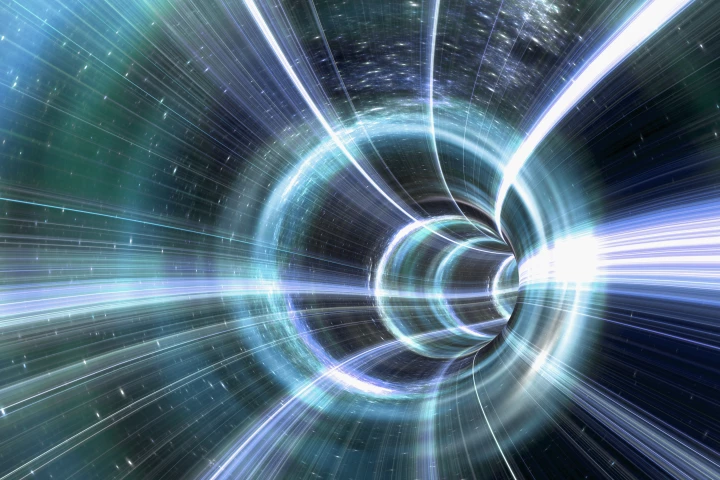 Wormholes are a sci-fi staple – but could they be science fact? Surprisingly they fit into current physics models, although no evidence has ever been found. Now, researchers have outlined how we might go about looking for wormholes in our own galaxy.
 -
 Last year gravitational waves were detected from a massive black hole collision. But now astrophysicists propose a new explanation: a collision of two boson stars – hypothetical, invisible objects that could help untangle the mystery of dark matter.
 -
 How exactly supermassive black holes got so big remains a mystery, but a new study suggests they may have been born from supernovae of hypothetical, primordial stars far bigger than any around today. And we might soon be able to detect the leftovers.
 -
 The universe will most likely end by slowly fading to black over trillions of years. Now a theoretical physicist has calculated the last interesting event that will ever happen: the explosions of stars called black dwarfs, which don’t even exist yet.