
Medical Innovations
The pace of innovation and change in the health and medicine space is accelerating wildly, as a broad range of new technologies and scientific discoveries unlock new treatments and therapies we couldn't have dreamed of 10 or 20 years ago. This section focuses on the frontiers of medicine, including medical AI, imaging & diagnostics, medical devices, robotics, bionics, prosthetics, surgical devices, brain-computer interfaces, personalized medicine, psychedelics and more.
Top News
-
 Does the feeling of standing up too fast and suddenly getting lightheaded sound familiar? Tracking your blood flow can explain why this is happening, and that’s what sets Lumia 2 apart from other similar energy-management devices.
 -
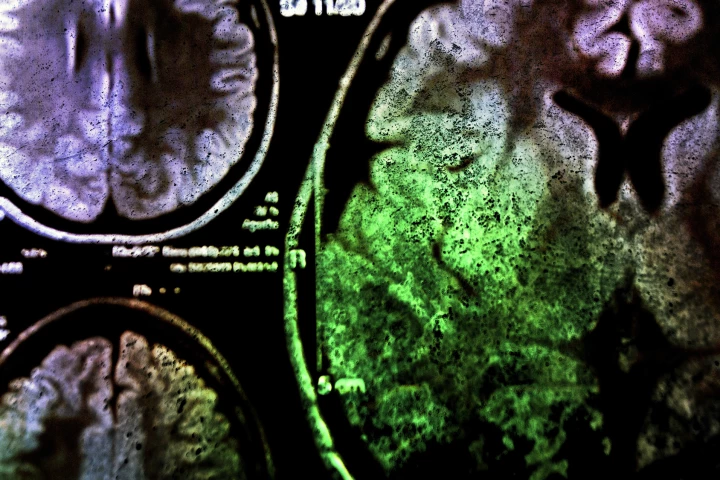 A new study offers hope for brain cancer patients facing memory loss from radiotherapy. By blocking a single immune receptor, scientists preserved cognition in mice without dulling the cancer-killing power of radiation.
 -
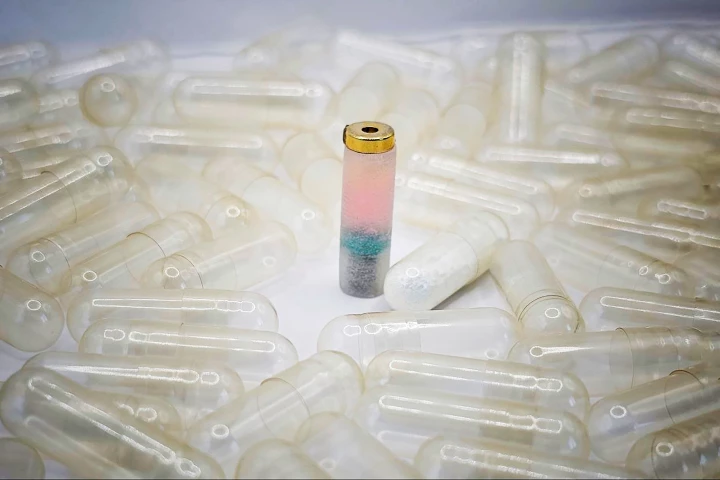 When an ulcer creates an actual perforation in the digestive tract, surgery is currently the only treatment. In the not-too-distant future, however, such holes may be easily plugged with the equivalent of a tiny remote-control swallowable pen.
Load More
Latest News
-
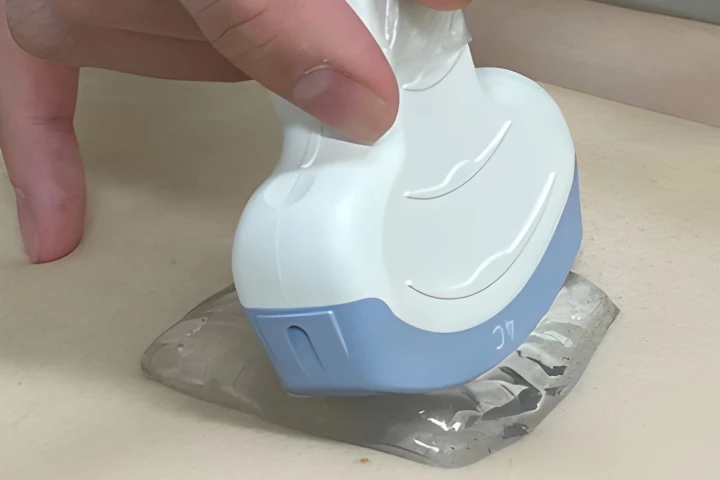 If you've ever had a sonogram you know that, even though the test isn't too hard to endure, the cold glob of gel that goes on your skin before you get "wanded" is pretty unpleasant. Japanese researchers have now come up with an alternative.
 -
 It turns out donated blood has a shelf life – and it can be very different for each donor. Recently, scientists have found a way to track how blood ages, helping hospitals manage their supply more effectively.
 -
 Don’t remember if you took your pills? Try MIT’s SAFARI (Smart Adherence via FARaday cage And Resorbable Ingestible). The capsule has its own bioresorbable radio that activates itself when swallowed, so you’ll never worry about missing a dosage.
 -
 Researchers have developed a spray-on powder that turns into a wound-conforming gel when it comes in contact with blood. The breakthrough has the possibility of dramatically improving wound care in combat and other life-threatening situations.
 -
 A tool long used to probe neural circuits in the lab is now being floated as a new way to treat human patients. The technique uses light to turn specific neurons on or off, and it could be used to treat everything from chronic pain to epilepsy.
 -
 For millions, losing their sense of smell reshapes daily life. Once damaged, the system is difficult to restore. That challenge led researchers to stop asking how to fix smell, and start asking whether its information might reach the brain another way.
 -
 A team of researchers in China has developed a remarkable device to allow people with limited mobility to use computers and experience VR content by moving their eyeballs – and to power the gadget simply by blinking.
 -
 There could be new hope in the fight against gum disease. Scientists have developed a toothpaste that targets only the bacteria that cause periodontitis, leaving the rest of the oral microbiome healthy and intact.
 -
 Magnetic bioactive nanocomposites can eliminate tumors through magnetic arson while helping build new bone. Integrating bioactivity with magnetic performance may be key step in creating smart nanomaterials for oncology and medical regeneration.
 -
 Columbia and Stanford researchers have debuted a new paper-thin brain-computer interface, the Biological Interface System to Cortex (BISC). The device offers hope to patients enduring seizures, strokes, spinal cord injuries, ALS, and blindness.
 -
 A new MIT method eliminates the need for hour-long infusions of antibodies for immunocompromised patients. With highly concentrated particles of antibodies created without a centrifuge, mass-manufacturing of better single-shot antibodies is here.
 -
 Scientists at Northwestern University have developed a sub-scalp device that beams light through bone into the brain, teasing a future of drug-free pain relief, cybernetic control of robotic limbs, and the simulation of sight, hearing, and touch.
 -
 See how scientists can now watch DNA repair in real time. A new glowing sensor developed at Utrecht University reveals how cells fix double strand breaks live.
 -
 US brain-computer-interface startup Paradromics is establishing itself as a major player in the neural-device space, with the Food and Drug Administration green-lighting a human trial to test its ability in restoring speech to people with paralysis.
 -
 Researchers at MIT have just developed a new lipid nanoparticle that super-enhances the effectiveness of the mRNA vaccine in mice to a hundred times its stand-alone effectiveness, reducing required dosages while also reducing toxicity in the liver.
Load More